Granite countertops have been popular for decades. But here’s the question most Ohio homeowners ask: are they still worth it? With engineered options available now, should you still choose natural granite? The answer is more nuanced than you might think.
Granite countertops are just one option. Understanding how granite stacks up against quartz, marble, and engineered materials helps you make informed decisions. Our complete countertop materials comparison guide covers all your options side-by-side, costs, maintenance, durability, and real-world performance.
Granite countertops benefits are real and substantial. They’re beautiful. They’re durable. They add home value. But they also require maintenance that engineered alternatives don’t. Understanding both sides helps you make the right choice for your kitchen. This guide covers everything about granite. Why Ohio homeowners still choose it. How durable natural granite kitchen counters actually are. Granite maintenance requirements honestly explained. Granite vs engineered stone comparison. Granite color options available. Real costs. Smart decisions.
Why Granite Countertops Benefits Still Matter in Ohio
Granite has been the premium countertop choice for 20+ years. That’s not because of marketing. It’s because the benefits are genuine. Natural granite kitchen counters offer something engineered stone can’t match: authentic natural beauty. Each slab is completely unique. The veining patterns are one-of-a-kind. No two granite countertops are identical.
That uniqueness matters psychologically. When you look at your countertop, you see something special. Something natural. That feels different from engineered material. It’s a subtle but real difference that homeowners notice daily. Beyond aesthetics, granite performs exceptionally well. It resists heat. A hot pot placed directly on granite won’t damage it. Quartz might. Granite handles it easily.
Durability is another major benefit. Granite countertop durability is exceptional. Properly sealed granite lasts 20+ years without issues. Many last 30+ years. That’s real longevity. Ohio homes stay put. Homeowners want countertops that last. Granite delivers that promise. The stone itself is essentially indestructible. It’s been around for millions of years. Not changing anytime soon.
Resale value is measurable. Granite countertops increase home value. Buyers see granite and think premium. Engineered countertops don’t command the same perception. If you’re planning to sell within 5-10 years, granite makes financial sense. You’ll recover significant cost through increased home value.
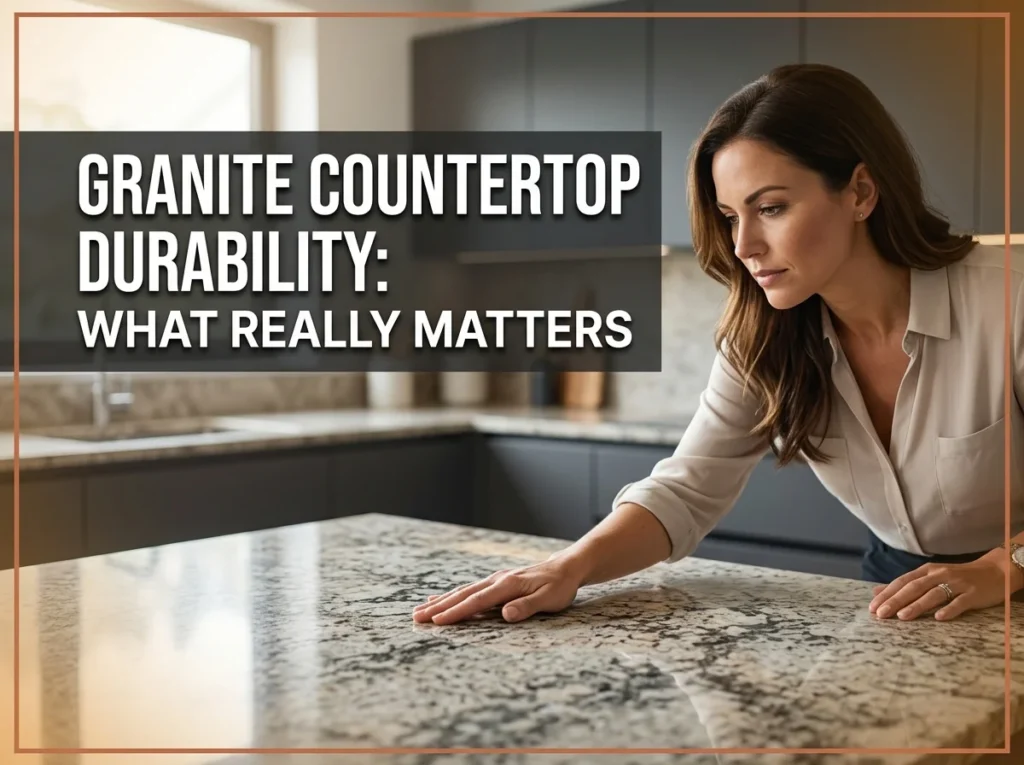
Granite Countertop Durability: What Really Matters
Understanding durability requires honesty about what granite can and cannot do. Granite countertop durability is excellent but not unlimited. Granite is extremely hard. Harder than steel. You can place sharp knives on granite. You won’t damage the stone. That durability is real.
Heat resistance is genuine. You can place hot pans directly on granite. It won’t burn. Won’t crack. This freedom is valuable in busy kitchens. Other materials need trivets. Granite doesn’t. That convenience matters daily.
Water resistance is good but conditional. Granite is porous. It absorbs water over time. That’s why sealing is critical. A properly sealed granite countertop resists water effectively. An unsealed or poorly sealed granite countertop absorbs moisture. Mold can grow. Stains happen. Sealing solves this. Most people seal granite annually or every 1-3 years depending on use.
Chip resistance is strong but not absolute. You can chip granite if you really try. A heavy object dropped hard might create a small chip. But this is rare. Most granite kitchens go decades without chips. Scratching is virtually impossible. You won’t scratch granite with normal kitchen use.
The real durability limitation is staining. While sealed granite resists stains well, it can stain if spills sit too long. Wine. Coffee. Vinegar. Acidic substances are the enemy. Leave a spill for an hour and it might stain. Clean immediately and no problem. This is the main maintenance concern most people face.
Granite vs Engineered Stone: The Honest Comparison
Granite vs engineered stone is the comparison homeowners constantly make. Both have merit. Understanding the differences helps you choose right.
Quartz (engineered stone) is non-porous. Water doesn’t absorb. Stains don’t happen. No sealing needed ever. This is huge for busy families. You don’t think about maintenance. It just works. Engineered stone is also more consistent. You know exactly what you’re getting. No surprises with color variation.
Granite is porous. Requires sealing. Stains can happen. But granite is natural. Each slab is unique. That character appeals to many people. Granite is also slightly cheaper upfront. $60-$100 per square foot installed versus $80-$150 for quality quartz.
Durability is similar. Both last 20+ years easily. Heat resistance is similar. Both handle hot pans. Appearance is different. Granite looks natural and varies. Quartz looks engineered and consistent. Neither is objectively better. It’s preference.
Maintenance is the real difference. Quartz needs almost nothing. Wipe and done. Granite needs annual sealing. Spills need quick attention. If you hate maintenance, quartz wins. If you appreciate natural stone and don’t mind sealing, granite wins.
Quartz is engineered to solve granite’s maintenance challenges. It’s non-porous. Doesn’t require sealing. Stains don’t happen. For a detailed comparison of how quartz countertops actually stack up against granite, see our engineered quartz countertops compared to granite guide covering durability, maintenance, and cost.
Resale value favors granite slightly. Buyers perceive natural stone as more premium. But both options increase home value. The difference isn’t enormous. Choose based on lifestyle, not just resale.
Natural Granite Kitchen Counters: Selection and Installation
Choosing natural granite kitchen counters is exciting but requires knowledge. You’re selecting a slab. Not ordering from a catalog. Each slab is unique.

Granite comes in various colors. Black granite with white or silver flecks (popular, dramatic). Red granite with gold or orange undertones (warm, elegant). White and gray granite with subtle veining (classic, timeless). Green or blue granite (uncommon, striking). Brown or tan granite (warm, earthy). Pink or purple granite (unique, bold).
Color selection depends on kitchen design. Light kitchens work with light granite (white, cream, light gray). Dark kitchens work with dark granite (black, deep brown, deep gray). Warm kitchens work with warm tones (red, brown, gold). Cool kitchens work with cool tones (gray, blue, black).
The real decision comes at the granite yard. You see actual slabs. Different lighting changes appearance. What looks perfect under showroom lights might look different in your kitchen. Reputable fabricators bring samples to your home. You see them in actual lighting. This is worth doing. Brings certainty to the decision.
Installation requires professional fabricators. Custom templating ensures perfect fit. Sink cutouts. Cooktop openings. Backsplash. All require precision. Professional installation prevents leaks and problems. DIY installation isn’t realistic for granite.
Granite Maintenance Requirements: Honest Assessment
Granite maintenance requirements are moderate. Not negligible. Not burdensome. Just regular attention required.
Sealing is the primary maintenance. Most granite needs sealing every 1-3 years. Some high-traffic kitchens need it more often. Annual sealing is a safe approach. It’s not difficult. You hire someone or do it yourself (it’s simple). Cost is $200-$400 for professional sealing. Cheaper if you DIY.
Daily cleaning is simple. Warm water and mild dish soap works perfectly. A soft cloth or sponge. Wipe spills immediately (especially acidic substances). That’s it. Weekly cleaning is the same. Nothing special needed.
Avoid acidic cleaners. Vinegar, bleach-based cleaners, and harsh chemicals can damage granite sealing. Use granite-specific cleaners if you want specialized products. But honestly, soap and water works great.
Avoid cutting directly on granite. Use a cutting board. It’s not that granite will be damaged. It’s that you’ll dull your knives. Granite is harder than steel. Your knives lose.
Avoid extreme temperature changes. Taking a hot pan from stovetop and placing it directly on cold granite could theoretically cause cracking. In practice, this rarely happens. But trivets are safer. They’re cheap protection.
Don’t use granite as a stepladder or sit on edges. Granite is strong but concentrated weight on edges can chip corners. Just be aware. Handle with reasonable care.
Granite Color Options and Design Considerations
Granite color options are extensive. More variety than most people realize. Understanding options helps you choose well.
Black granite is the most popular. Sleek. Dramatic. Works with modern kitchens. Hides fingerprints well. Shows dust easily. Looks elegant. Expensive at premium prices. But beautiful.
White and gray granite is classic. Timeless. Works with any kitchen style. Ranges from pure white to dark gray. Subtle beauty. Many people choose these because they’re safe choices that age well.
Red and brown granite adds warmth. Works with traditional kitchens. Earth tones. Cozy feeling. Less dramatic than black but more character than neutral grays.

Green and blue granite is uncommon. Bold choice. Makes a statement. Requires confident design sense. Not for everyone. But beautiful if you love color.
Pink and purple granite is rare. Very bold. Requires specific kitchen design to work. Not popular but striking.
Veining patterns vary. Some granite has tight patterns. Other granite has bold veining. Some is speckled. Some is swirled. The variation is part of granite’s appeal. You’re choosing the specific slab, not a color category.
Light granite shows dirt more easily. Dark granite hides dirt. That’s the practical difference. Choose based on maintenance tolerance. Also consider kitchen lighting. Same granite looks different under different lighting conditions.
Granite Countertops Costs in Ohio
Real pricing for Ohio homeowners.
Material cost: $50-$150 per square foot. Varies by color and quality. Black granite is typically mid-range. Exotic colors cost more. Common colors cost less.
Installation cost: $1,500-$4,000 for average kitchen. Depends on kitchen size and complexity. Sink cutouts. Cooktop openings. Backsplash. Add cost.
Sealing cost: $200-$400 every 1-3 years.
Total cost for average kitchen: $4,000-$8,000 including material and installation.
Compare to quartz at $5,000-$10,000 total. Granite is often cheaper upfront. But factor in sealing costs over 20 years ($1,000-$2,000 additional).
Ohio pricing is reasonable compared to national averages. Labor costs are moderate. Material availability is good. You’ll find quality fabricators throughout Ohio.
Get three quotes. Compare materials offered. Installation included? Sealing included? Warranty? Make sure quotes are detailed and comprehensive.
FAQ About Granite Countertops Benefits
Ready to move forward with granite countertops?
Professional installation ensures perfect fit, proper sealing, and lasting results. Our professional granite countertop installation in Ohio includes custom fabrication, expert installation, and warranties on all work
How often do I need to seal granite countertops?
Every 1-3 years typically. High-traffic kitchens might need annual sealing. Low-use kitchens might go 3 years. Test your granite periodically. Put water droplet on surface. If it beads, sealing is still good. If water spreads and absorbs, it’s time to seal. Professional sealing costs $200-$400.
Can I use vinegar to clean granite?
No. Vinegar is acidic and damages granite sealing. Avoid acidic cleaners (lemon juice, bleach-based products). Use warm water with mild dish soap. That works perfectly. If you want specialized cleaners, buy granite-specific products. But honestly, soap and water is fine.
Is granite really worth it compared to quartz?
Both are excellent. Granite has character. Each slab is unique. Slightly cheaper upfront. But requires sealing. Quartz is easier maintenance. No sealing. Consistent appearance. Slightly more expensive. Choose based on lifestyle. If you hate maintenance, choose quartz. If you appreciate natural stone, choose granite.
What granite color hides dirt best?
Dark granite (black, dark brown, dark gray) hides dirt best. Light granite (white, cream, light gray) shows dirt more easily. Consider your tolerance for visible dust and fingerprints. Black granite is popular partly because it hides these issues. But fingerprints show more on polished black granite than matte finishes.
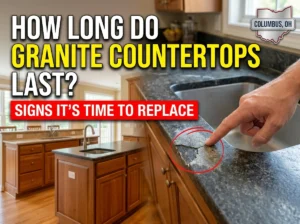
How long do granite countertops last?
20+ years easily. Many last 30+ years. Granite is essentially indestructible. It’s the maintenance and sealing that determines actual lifespan. Properly sealed and maintained granite lasts decades. Neglected granite might need resealing before it fails, but the stone itself outlasts the homeowner usually.