Countertops take a lot of daily use, from cooking and cleaning to spills, heat, and heavy appliances. Over time, that wear can leave behind cracks, stains, loose seams, or damaged areas that are hard to ignore. The challenge is knowing which problems can be fixed and which ones point to a full replacement.
For homeowners looking into countertop replacement Columbus OH, the decision should be based on condition, function, and future plans rather than age alone. A surface may still look decent but no longer suit a new kitchen layout, while another may simply need a minor repair. Knowing the difference helps you avoid replacing too soon or spending repeatedly on a countertop that is already failing.
This guide explains the signs that may point toward replacement, when a repair can still make sense, and what to check before removing the existing surface.
How Do You Know When a Countertop Needs Replacing?
Look at the whole countertop, not just its age.
One damaged corner is different from cracks across several areas. A small surface mark is different from deep staining around the sink, damaged seams, and weak sections underneath.
The way the room works matters too. You might have a countertop that is still usable but no longer fits a new sink, appliance layout, island, or cabinet plan.
Replacement becomes easier to justify when the existing surface has several problems or stands in the way of changes you already plan to make.
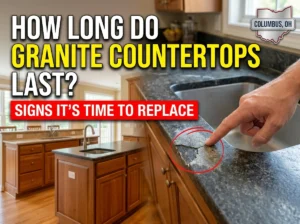
Cracks Are Spreading or Showing Up in Weak Areas
Not every crack means the countertop has to go.
A small chip along an edge may be repairable depending on the material and the damage. A crack that keeps spreading deserves a closer look, especially near sinks, cooktops, seams, or narrow strips of countertop.
Those areas often have less material around an opening, so the cause matters as much as the visible crack.
Look underneath as well.
If cabinets have shifted or part of the countertop lacks proper support, repairing the top alone may not solve the problem. A new surface also needs a sound base, so cabinet movement should be dealt with before replacement.
The Surface Never Really Looks Clean Anymore
Busy countertops pick up marks. That is normal.
The concern is a surface covered with deep stains, worn patches, chips, scratches, dull areas, or damage that remains after normal care. At that point, the issue may be more than one spot that needs attention.
Do not rush straight to replacement, though.
Some surface problems can be improved through cleaning, maintenance, or professional repair. Natural stone, engineered materials, and other countertop surfaces do not all respond to damage in the same way.
The better question is simple: can the problem be corrected without leaving you with several other worn areas to deal with next?
Water Damage Is Appearing Around the Sink
Water problems should be checked before a new countertop is ordered.
Look closely around the sink, faucet, seams, backsplash edge, and the cabinet below. Damaged caulk or an open joint can allow water to reach areas that are normally hidden.
You might notice swelling below the counter, staining inside the cabinet, loose material, or movement near the sink.
That matters for bathroom countertop replacement Columbus projects as well. Vanities see frequent splashes, wet items, soaps, and cleaning products. If moisture is getting below the surface, find the source first.
Replacing the countertop while leaving a leak or damaged cabinet underneath only covers the problem.
The Countertop No Longer Fits Your Kitchen
Sometimes replacement has very little to do with damage.
The kitchen itself may have changed.
Maybe you want a wider island with seating. You may be moving a sink, changing a cooktop, adding cabinets, or making more room around an appliance. Once the cabinet footprint changes, there is a good chance the old countertop will not fit the new layout.
This is common when countertop remodeling Columbus becomes part of a larger kitchen update rather than a simple surface swap.
Settle the major layout decisions first. Cabinet positions, sink style, appliance openings, and overhangs can all affect how the countertop needs to be measured and fabricated.
Repairs Keep Turning Into More Repairs
A repair should solve a problem, not become part of a cycle.
If you have one chip in an otherwise solid countertop, repairing it may be the obvious choice. But if a seam has already been fixed, another edge is damaged, stains cover a large area, and a new crack has appeared, it is worth looking at the bigger picture.
There is no useful rule such as “three repairs means replace it.”
Instead, consider what you will have after the next repair. If the countertop will still have several worn or damaged areas, putting more money into isolated fixes may not give you much benefit.
The Countertop Feels Outdated After the Rest of the Room Changed
A dated style by itself is not a strong reason to tear out a good countertop.
Trends move quickly. Countertops are not something most homeowners want to replace every time colors or finishes change.
Still, appearance becomes part of the decision when other issues already exist.
A countertop may look especially tired after cabinets are painted, flooring is updated, or new lighting and appliances are added. If that same surface also has stains, old seams, damaged edges, or a layout you dislike, replacement may solve several problems at once.
Think about how the whole room fits together instead of choosing a slab in isolation.
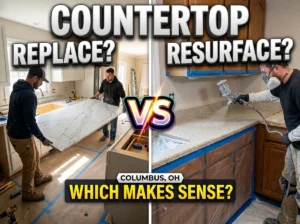
Countertop Repair vs Replacement: Which Makes More Sense?
Repair usually makes sense when the problem is small and the rest of the countertop remains sound.
A limited chip, light scratch, minor stain, or small maintenance issue may not justify removing an entire surface.
Replacement becomes a stronger option when the damage is spread across the countertop or when repairing one issue leaves several others behind. Large cracks, recurring seam trouble, water-related damage, major layout changes, or weak support below the countertop deserve more attention.
There is another factor: future plans.
If you expect to remodel the kitchen soon, an expensive repair to a countertop that will be removed anyway may not make sense. On the other hand, replacing a countertop now and changing the cabinets soon afterward can create extra work.
The best choice is the one that fits both the current condition and what you plan to do with the room next.
Can You Replace Countertops Without Replacing the Cabinets?
Yes, many countertop projects can keep the existing cabinets.
The cabinets need to be in suitable condition. They should be stable, properly secured, and able to support the replacement surface.
Keeping the cabinets makes sense when you like the layout and the boxes are still in good shape. It can also keep a project more focused if the main problem is simply the countertop.
Do not overlook small cabinet issues just because they will sit below the new slab.
If a cabinet is loose, uneven, water damaged, or already scheduled for replacement, deal with that before the new countertop is installed.
Homeowners reaching the installation stage can learn more about professional countertop installation before planning the final steps. Buckeye Rock Tops’ installation page covers custom granite, quartz, and marble countertop work in Columbus.
Which Countertop Material Should You Choose?
Choose around your daily habits, not just the showroom sample.
A surface can look great under display lighting and still be the wrong fit for the way your household cooks, cleans, and uses the room.
Granite
Granite is natural stone. Each slab can have its own color movement, mineral patterns, and variation.
It suits homeowners who like a natural look and are comfortable following the care needs of the stone they select.
Quartz
Quartz is engineered, which gives homeowners a wide range of colors and patterns to work with.
Its more controlled appearance can be useful when you want the counters to tie closely to cabinets, walls, or other finishes.
Marble
Marble is known for natural veining and a distinct appearance.
It can also show etching and staining more readily than some alternatives, so the look should be weighed against how you use the space.
Material selection deserves more thought than simply asking which one is “best.” Buckeye Rock Tops’ granite vs. quartz vs. marble comparison guide looks at the different strengths, maintenance needs, and costs of the three materials.
What Should Columbus Homeowners Check Before Replacement?
Start with the areas the new countertop will depend on.
Check the cabinets first. Then look at plumbing, the sink, appliances, backsplash, and any changes you expect to make to the room.
The sink area deserves extra attention in Columbus homes. The City of Columbus says its water is softened to an average hardness of about 120 parts per million, or roughly 7 grains per gallon. That is considered moderately hard.
Why does that matter here?
Mineral residue around faucets and sink areas can sometimes look worse than the countertop damage itself. Before assuming pale deposits or buildup mean the surface needs replacement, clean and inspect the area properly. The City also notes that calcium carbonate particles can be associated with the hardness of Columbus water.
Moisture is a different issue. If the cabinet below the sink is swollen, soft, stained, or wet, look for a leak or failed seal rather than treating the countertop as the only problem.
For kitchen countertop replacement Columbus, it also helps to decide on the sink and any major appliance changes early. Those choices can affect countertop openings and the final layout.
What Happens When Old Countertops Are Replaced?
The exact job changes from home to home, but replacement involves more than picking a new slab.
There may be removal of the existing countertop, disposal, cabinet preparation, measurements or templating, fabrication, installation, sink work, and final finishing.
Find out who is handling each part before demolition starts.
This matters because different trades may be involved. Plumbing may need attention around the sink. A backsplash can meet the old countertop in a way that affects removal. Cabinets may need adjustment once the existing surface is gone.
Do not remove a usable countertop too early just because you have decided to replace it. Make sure the next stages of the project are planned first.
Is Countertop Replacement Worth It Before Selling a Home?
It can be, but replacement is not automatically the right resale decision.
A badly cracked, stained, or visibly damaged countertop can pull attention away from an otherwise tidy kitchen. Replacing it may improve the overall presentation.
A clean and functional countertop is another story.
If the surface works well and only looks slightly dated, other repairs may deserve the budget first. Cabinet condition, lighting, flooring, paint, hardware, and general maintenance all shape how the room feels.
Avoid assuming that one expensive countertop change will make up for problems elsewhere.
If selling is the main goal, judge the kitchen as a whole.
FAQs About Countertop Replacement
How do I know if my countertop needs replacing?
Look for widespread rather than isolated problems. Growing cracks, water damage, repeated repairs, loose sections, deep staining, and a layout that no longer works are stronger signs that replacement may be worth considering.
Can a cracked countertop be repaired?
Some small cracks and chips may be repairable. The material, crack location, size, and cause all matter. A growing crack or one near a sink or seam should be assessed before you decide.
Can I keep my cabinets when replacing countertops?
Often, yes. Existing cabinets may stay if they are stable, properly secured, and suitable for the replacement surface.
Should I replace countertops during a kitchen remodel?
It often makes sense to plan them together. Changes to cabinets, sinks, appliances, islands, and other parts of the layout can affect countertop measurements.
Is an old countertop automatically ready for replacement?
No. Age alone is a poor reason to replace a countertop that remains solid and useful. Its condition, layout, material, and your future plans matter more.
Should I choose my sink before ordering new countertops?
It is better to make major sink decisions early. Sink dimensions and installation style can affect the opening made in the countertop and the surrounding layout.
When Does Countertop Replacement Make Sense?
The strongest reason to replace a countertop is not that it has reached a certain age. It is that the existing surface no longer makes sense to keep.
Maybe cracks are spreading. Water has damaged the area below. Repairs keep adding up. Or a kitchen remodel has changed the layout so much that the old countertop simply cannot stay.
At the same time, small cosmetic issues should not be turned into a bigger project than they need to be.
If you are weighing repair against countertop replacement Columbus OH, look at the surface, cabinets, sink area, and future plans together. That gives you a much clearer answer than focusing on one stain or chip.
When replacement looks like the sensible next step, you can discuss your countertop project with Buckeye Rock Tops before deciding how far the renovation needs to go. Their Columbus contact page lists direct phone, email, and location details for project inquiries.