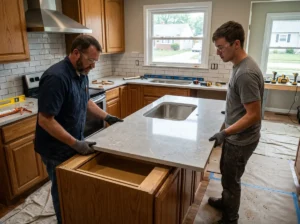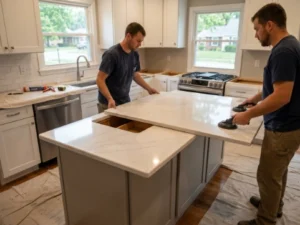
You’re standing in your kitchen looking at that countertop. It’s tiring. Worn. You’re ready for something new. But here’s where most people freeze. Granite? Quartz? Marble? They all look nice. But which one is actually right for your home?
Here’s the truth: countertop materials comparison isn’t complicated once you understand what you’re actually comparing. Each material has different strengths. Different weaknesses. Different costs. Different maintenance requirements. This guide walks you through all three. Granite vs quartz countertops. Marble’s role. What makes sense for kitchens versus bathrooms. Real costs. Real durability. By the end, you’ll know exactly which best countertop materials fit your life.
Why Material Choice Actually Matters
Picking the wrong countertop material is expensive. You’re stuck with your choice for 15-20+ years. That’s a long time to regret something you use multiple times daily.
The right material works with your lifestyle. Do you cook a lot? Do you have kids and pets? Do you want to spend time maintaining the surface? Are you selling soon? These questions change everything. Stone countertop types aren’t just about looks. They’re about fitting into your actual life. The best choice for your neighbor might be terrible for you. That’s why material comparison matters this much.
Cost matters too. Initial price varies wildly. But so does maintenance. Over 20 years, maintenance adds up. Some materials need annual sealing. Others need nothing. Some stain easily. Others shrug off spills. The cheapest material upfront might be the most expensive long-term. Understanding this prevents that regret.
What You’re Actually Comparing
Before diving into specific materials, understand what matters. Durability tells you how long it lasts before showing wear. Maintenance tells you how much work you’ll do. Cost includes both installation and upkeep. Aesthetics is just how it looks (important but not everything). Resale value matters if you’re selling. Understanding these factors helps you make real decisions.
Granite vs quartz countertops comes down to natural versus engineered. Marble is its own thing luxurious but demanding. No material is perfect. Each trades something off. Granite trades maintenance for beauty. Quartz trades character for ease. Marble trades practicality for luxury. Understanding these trades helps you pick right.
Granite Countertops: Natural Beauty & What Comes With It
Granite is natural stone. It’s mined. Sliced. Polished. Each slab is unique. That uniqueness is beautiful. That uniqueness also means you get exactly one pattern. No two are identical.
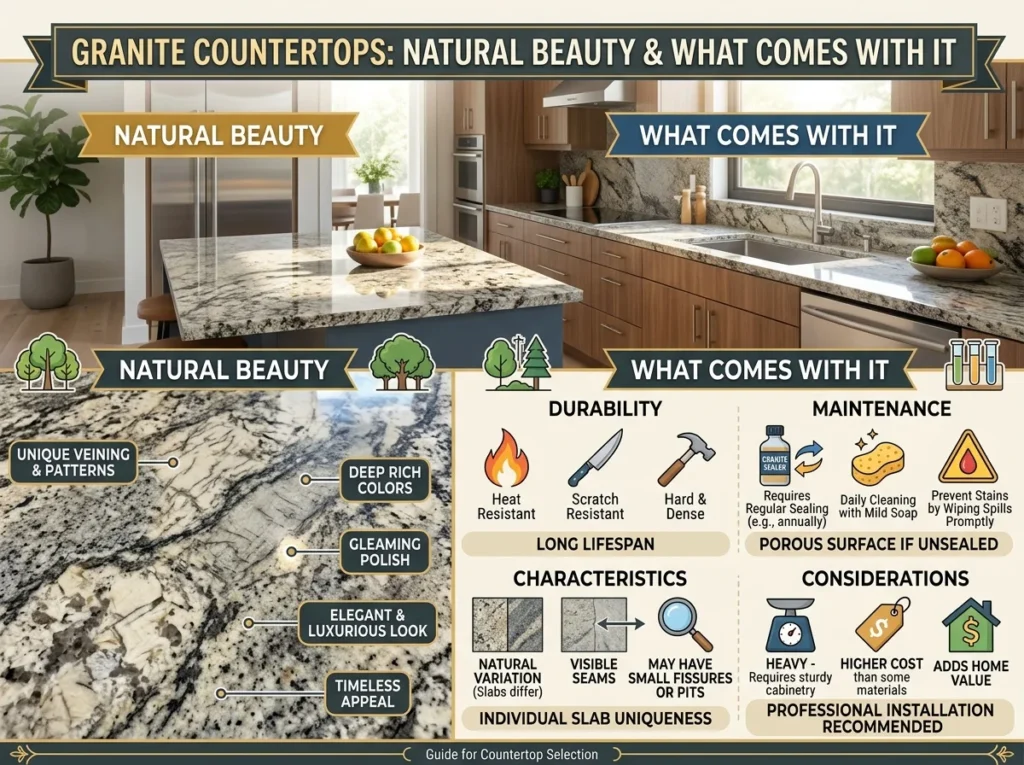
Granite looks incredible. Rich colors. Interesting patterns. Visual depth. Kitchens with granite look upscale. That’s why it’s still popular despite newer options existing. It’s genuinely beautiful. Real natural stone has character engineered materials that can’t quite match.
Durability is solid. Granite resists scratching. It handles heat. Knives don’t phase it. Granite is genuinely tough. You can place hot pans directly on it (though it’s not recommended). That durability is real. It lasts decades if you take care of it.
Maintenance is the tradeoff. Granite is porous. It absorbs liquids. Wine spills. Oils. Acidic stuff. If you leave liquids sitting, they stain. This is the biggest complaint about granite. You must seal it. Typically annually. Sometimes more often. You must clean spills quickly. You must be careful with acids (lemon juice, vinegar).
Cost runs $60-$100 per square foot installed. That’s mid-range pricing. Not cheap. Not premium. Moderate investment.
Quartz Countertops: Engineered Stone & Low Maintenance
Quartz is engineered. It’s about 90% crushed quartz stone plus 10% resin. Ground-up stone held together with polymer. That’s the difference. It’s manufactured, not mined.
This engineered approach solves granite’s problems. It’s non-porous. Doesn’t absorb liquids. Wine spills? Doesn’t stain. Doesn’t need sealing. Ever. This is quartz’s superpower. You get a stone-like appearance with easy maintenance.
The appearance is clean and contemporary. Less variation than granite. More consistent. Some people love this. Predictability. Others miss granite’s character. Quartz doesn’t have those dramatic natural patterns. It has subtle variation but more uniformity overall.
Durability is excellent. Similar to granite. Resists scratching. Handles heat (though extreme heat can damage the resin). Doesn’t chip easily. Lasts as long as granite if you care for it properly. Similar lifespan.
Maintenance is minimal. Wipe with warm soapy water. That’s it. No sealing needed. No special cleaners required. This is why busy families choose quartz. Less thinking. Less work. Just clean it normally.
Cost runs $80-$150 per square foot installed. Slightly more expensive than granite upfront. But factor in zero sealing costs over 20 years and quartz becomes competitive or cheaper.
Marble Countertops: Luxury & High Maintenance Reality
Marble is natural stone. It’s luxurious. Elegant. Timeless. Every designer magazine features marble. It’s the material of choice for high-end kitchens.
Appearance is stunning. Soft colors. Elegant veining. It has a luxurious feel. Marble photographs beautifully. Your kitchen looks magazine-worthy. That’s not an exaggeration. Marble genuinely elevates aesthetics. It’s the premium choice for a reason.
Durability is the problem. Marble is softer than granite. It scratches easily. Sharp knives leave marks. Pans cause damage. Even water can damage marble over time if you’re not careful. Marble requires babying. This isn’t suitable for busy families with kids. It’s suitable for homeowners who treat it as precious.
Maintenance is intense. Marble is porous (more than granite). It absorbs everything. Wine, oils, anything acidic causes stains. Acid etches marble leaves dull spots even with sealant. You must seal it regularly. You must clean spills immediately. You must use special cleaners. You must use trivets under everything hot. You must coasters under everything wet. Marble demands respect and attention.
Cost runs $100-$300+ per square foot installed. This is premium pricing. High upfront cost. Plus ongoing maintenance costs. Marble is an investment. But it’s beautiful enough that some people accept the maintenance burden.
Granite vs Quartz Countertops: The Direct Comparison
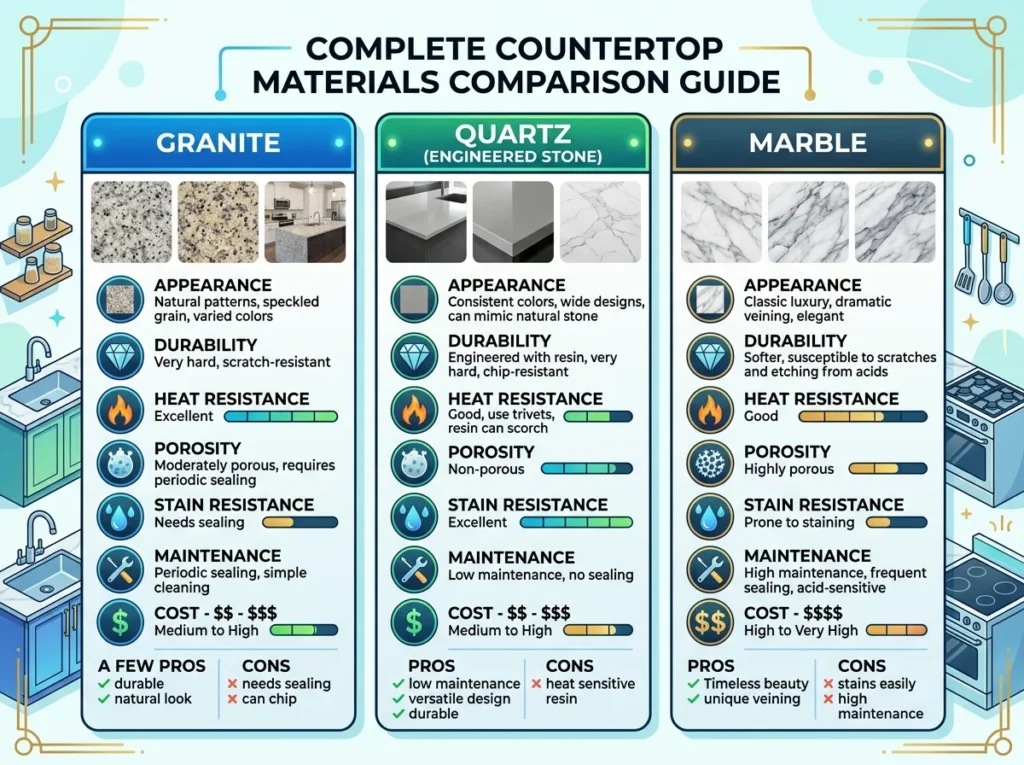
These two compete most directly. Both are durable. Both look good. But they’re genuinely different choices.
Granite wins for: Character. Unique patterns. Natural stone feel. Heat resistance. Luxurious appearance without premium price.
Quartz wins for: Easy maintenance. No sealing needed. Stain resistance. Consistency. Busy lifestyles. Families with kids.
If you’re drawn to the low-maintenance option, quartz has real advantages worth understanding. Our complete guide to engineered quartz countertops performance guide covers how quartz is made, durability, why it’s low-maintenance, color selection, and honest pros and cons
Granite is better if: You enjoy maintenance. You want unique beauty. You want to show off something special. You don’t mind annual sealing. You clean spills quickly.
Quartz is better if: You want to set and forget. You have a busy household. You want consistency. You don’t want to worry about stains. You want the easiest maintenance.
Cost-wise, quartz costs slightly more upfront but saves money long-term (no sealing). Granite costs less upfront but requires sealing maintenance.
“If you’re leaning toward granite, understanding the real benefits and maintenance requirements helps you make the right decision. Our guide to granite countertops benefits and maintenance covers durability, sealing needs, color options, and whether granite fits your lifestyle in detail.
Neither is objectively better. Both are excellent. Choice depends on lifestyle and preference.
Marble’s Place in the Comparison
Marble isn’t competing with granite and quartz the same way. It’s a different category. It’s for people who prioritize beauty over everything else. It’s for primary kitchens where appearance matters more than practicality. It’s for people who cook less and entertain more.
If you have kids and pets? Probably not marble. If you cook daily? Probably not marble. If you care most about luxury appearance? Marble might be worth the hassle.
Marble is the high-maintenance friend who’s gorgeous but requires constant attention. Some people love having that friend. Others would rather have easier friendships. Both approaches are valid.
Stone Countertop Types: Which Material Fits Your Kitchen?
Kitchen countertops get heavy use. They need durability. They handle heat. They suffer spills.
For busy kitchens: Quartz wins. Easy maintenance. No sealing. Stain resistance handles chaos.
For aesthetically-focused kitchens: Granite or marble depending on maintenance tolerance. Granite if you’ll maintain. Marble if maintenance doesn’t scare you.
For cooking-heavy kitchens: Granite handles heat better than quartz (engineered resin can damage from extreme heat). Marble is problematic due to maintenance needs.
For families with young children: Quartz absolutely. Easy cleanup. Stain resistant. No sealing worries.
For formal dining kitchens (less cooking): Marble if you love luxury. Granite if you want luxury without extreme maintenance.
Kitchen Countertop Materials Guide: Decision Framework
Start with lifestyle. How do you actually use your kitchen? That determines everything.
Then consider maintenance tolerance. How much work do you want to do? That eliminates options immediately. Marble is out if you don’t want maintenance. Granite requires commitment. Quartz asks for nothing.
Then think about the budget. Both initial and ongoing. Granite is cheaper upfront. Quartz is cheaper long-term if you factor in sealing costs.
Finally, consider aesthetics. What makes your kitchen feel right? That’s the tiebreaker when practical factors are equal.
Work through these questions and your best material becomes obvious. You’re not choosing based on magazine recommendations. You’re choosing based on your actual life.
Best Countertop Materials: Cost Comparison
Real pricing matters when deciding.
Granite: $60-$100 per square foot installed. Sealing costs $200-$400 annually. Over 20 years that’s $4,000-$8,000 in sealing alone.
Quartz: $80-$150 per square foot installed. Zero sealing costs. Lower cleaning costs (cheaper cleaner options). Total maintenance cost: $0.
Marble: $100-$300+ per square foot installed. Annual sealing $200-$400. Special cleaners $50-$100 yearly. Professional maintenance is sometimes needed. Total maintenance cost: $6,000-$10,000+ over 20 years.
Total cost of ownership (installation plus maintenance over 20 years):
Granite: $3,600-$6,000 install + $4,000-$8,000 maintenance = $7,600-$14,000 total
Quartz: $4,800-$9,000 install + $0 maintenance = $4,800-$9,000 total
Marble: $6,000-$18,000+ install + $6,000-$10,000+ maintenance = $12,000-$28,000+ total
These calculations assume 50-60 square feet (average kitchen). Prices vary by location and specific choices.
Quartz becomes cheapest long-term despite higher upfront cost.
Durable Countertop Options: Which Lasts Longest?
All three are durable. But durability looks different for each.
Granite is incredibly durable as natural stone. Properly maintained granite lasts 20+ years without issue. Some granite counters last 30+ years. It’s about maintenance consistency.
Quartz is equally durable. Properly maintained quartz lasts 20+ years easily. The engineered construction is stable. It doesn’t degrade like natural stone can. Quartz is predictably durable.
Marble can last decades but often shows wear sooner. Not because it fails suddenly. Because it scratches. Etches. Stains. Still functional at 20 years but visibly tired. Requires refreshing or professional restoration.
For maximum durability without fussing: Quartz. For durability with maintenance commitment: Granite. For durability with high-maintenance reality: Marble.
Making Your Final Decision
You’ve now seen the comparison. Granite vs quartz countertops. Marble’s role. Costs. Maintenance. Durability.
Start by eliminating options. No maintenance tolerance? Quartz is your answer. Love luxury? Marble might be worth it despite demands. Want balance? Granite.
Then confirm by lifestyle. Does your choice actually match how you live? If it doesn’t, reconsider.
Once you’ve decided on your material, professional fabrication and installation ensures perfect results. Our professional countertop fabrication and installation services handle granite, quartz, marble, and custom options with expertise and quality craftsmanship.
Finally, talk to professionals. See samples in person. Granite photos look different from real granite. Quartz varies by brand. Marble’s luxury translates differently in different lighting.
Your perfect countertop exists. It’s just about matching the material to your actual life instead of magazine aspirations.
FAQ About Countertop Materials Comparison
What’s the difference between granite and quartz?
Granite is natural stone mined from the earth. Quartz is engineered stone (90% crushed quartz plus 10% resin binder). Granite requires annual sealing and careful maintenance. Quartz requires no sealing and minimal maintenance. Granite shows natural variation and character. Quartz has more consistency. Both are durable and beautiful but serve different lifestyles.
Should I choose marble for my kitchen?
Only if you’re willing to maintain it religiously. Marble requires sealing, special cleaners, and immediate spill cleanup. It scratches from knives and pans. Acidic foods etch it. It’s beautiful but demanding. Better for primary kitchens where appearance matters more than practicality. Not ideal for busy families or heavy cooking.
What’s the most durable countertop material?
Quartz is arguably most durable because it’s engineered for consistency and doesn’t degrade. Granite is extremely durable but requires maintenance to prevent water damage long-term. Marble is durable as a material but shows wear sooner. For worry-free durability, quartz wins.
Do quartz countertops need sealing?
No. Quartz is non-porous so it doesn’t absorb liquids. No sealing needed. Ever. This is one of quartz’s biggest advantages over granite and marble. One less maintenance task to remember.
Which countertop material adds the most home value?
Granite and marble both add value for aesthetic appeal. Quartz adds value through practicality (easy maintenance, durability). Buyers appreciate all three. Choice should be based on your life, not resale value. A well-maintained kitchen with any of these materials sells well.
Can I put hot pans directly on these counters?
Granite handles heat well and hot pans won’t damage it (though it’s still better to use trivets). Quartz resin can be damaged from extreme heat use trivets always. Marble can etch from heat and avoid direct contact. None are damaged by briefly placing a hot pan, but all benefit from trivets.