You’re considering engineered quartz countertops. You’ve heard they’re low-maintenance. Durable. Beautiful. But you’re wondering: what exactly is engineered quartz? How does it compare to natural stone? Is it really worth the cost? Will it look as good as granite?
Engineered quartz countertops have become incredibly popular. For good reason. They’re practical. They’re beautiful. They’re durable. But understanding what you’re buying matters. This guide covers everything about quartz. How it’s made. Why quartz vs natural stone matters. Real quartz countertop durability. Why it’s low-maintenance. Quartz color selection options. Quartz pros and cons honestly explained. Real costs. Smart decisions. By the end, you’ll understand quartz completely. You’ll know if it’s right for you.
Quartz is one option among several. Understanding how it compares to granite, marble, and other materials helps you choose right. Our complete countertop materials comparison including quartz covers all options side-by-side, costs, maintenance, durability, and which material fits which lifestyle.
What Is Engineered Quartz Countertops?
Understanding what quartz is helps you make smart choices.
How Quartz Is Made
Engineered quartz countertops are manufactured. About 90% crushed quartz stone. About 10% resin binder. Ground-up stone held together with polymer. That’s the basic formula.
Manufacturers mix quartz chips. Add resin. Add pigments for color. Sometimes add mirrors or glass for sparkle. Press it all together. Heat and pressure compress it. Creates solid surface. Hardens into slabs.
Each manufacturer has different processes. Different ratios. Different quality levels. Some use better quartz. Better resins. Create superior products. Others cut corners. Quality varies significantly.
Why Engineered vs Natural
Natural stone is mined. Quartz is engineered. Why choose engineered? It’s more consistent. Colors are uniform. Durability is predictable. No surprises. Natural stone varies. Each slab is different. Sometimes that’s beautiful. Sometimes it’s risky.
Engineered quartz is non-porous. Water doesn’t absorb. Stains don’t happen. Natural stone is porous. Requires sealing. Stains can happen. That’s the practical difference.
Quality Levels
Premium quartz (Caesarstone, Cambria, Silestone): High-quality resin. Superior quartz. Beautiful colors. Best durability. Costs $80-$150 per square foot.
Mid-range quartz: Good quality. Decent colors. Good durability. Costs $50-$100 per square foot.
Budget quartz: Lower quality. Limited colors. Decent durability. Costs $30-$60 per square foot.
Brand matters. Premium brands hold up better. Last longer. Look better. Worth the extra cost.
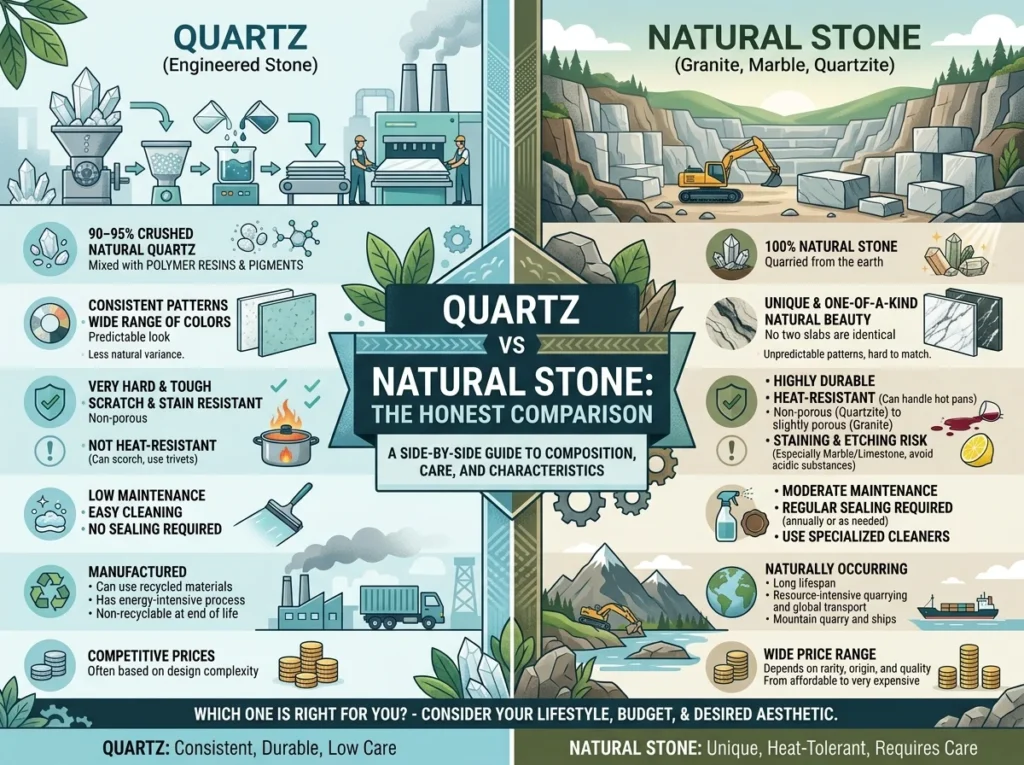
Quartz vs Natural Stone: The Honest Comparison
How does quartz stack up against granite, marble, and others?
Durability Comparison
Engineered quartz countertops are incredibly durable. Non-porous. Stain-resistant. Scratch-resistant. Lasts 20+ years easily. Very reliable.
Granite is durable too. Porous so requires sealing. Can stain. Can scratch. But beautiful. Lasts 20+ years if maintained.
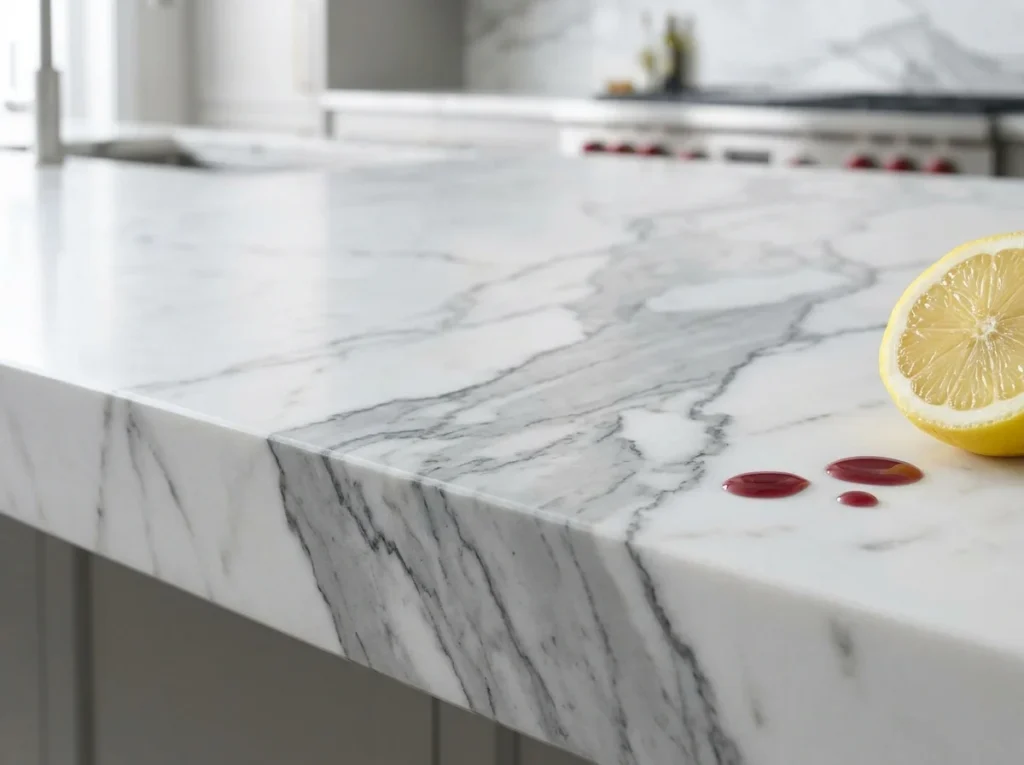
Marble is less durable. Soft. Scratches easily. Stains easily. Acids etch it. Requires babying. Beautiful but demanding.
Winner: Engineered quartz for durability. Granite close second. Marble requires too much care.
Maintenance Comparison
Engineered quartz countertops require minimal maintenance. Wipe with soap and water. That’s it. No sealing. No special cleaners. Truly low-maintenance.
Granite requires annual sealing. Special cleaners. Careful spill cleanup. More maintenance. Still manageable though.
Marble requires constant attention. Sealing. Special cleaners. Immediate spill cleanup. Coasters. Trivets. High-maintenance.
Winner: Engineered quartz for maintenance. Granite requires work. Marble is demanding.
Cost Comparison
Engineered quartz countertops: $50-$150 per square foot installed.
Granite: $60-$100 per square foot installed.
Marble: $100-$300+ per square foot installed.
Quartz and granite are similar price. Quartz slightly higher sometimes. Marble is premium price.
Factor in maintenance. Quartz costs nothing for maintenance. Granite costs $200-$400 annually for sealing. Over 20 years, that’s $4,000-$8,000 extra. Quartz becomes cheaper long-term.
Winner: Engineered quartz for total cost of ownership.
Appearance Comparison
Engineered quartz countertops look beautiful. Colors are consistent. Patterns are uniform. Modern aesthetic. Clean look.
Granite looks natural. Unique patterns. Variation. Traditional aesthetic. Character. Each slab is different.
Marble is stunning. Elegant. Luxurious. Timeless. But high-maintenance.
Appearance is preference. Some love quartz’s consistency. Others prefer granite’s natural variation. Both are beautiful.
Granite is the most popular natural stone option. Understanding granite’s benefits and challenges helps you appreciate quartz’s advantages. See our granite countertops durability and maintenance guide for detailed information about natural stone performance and care requirements
Quartz Countertop Durability: What It Really Means
Understanding durability helps you make realistic decisions.
Heat Resistance
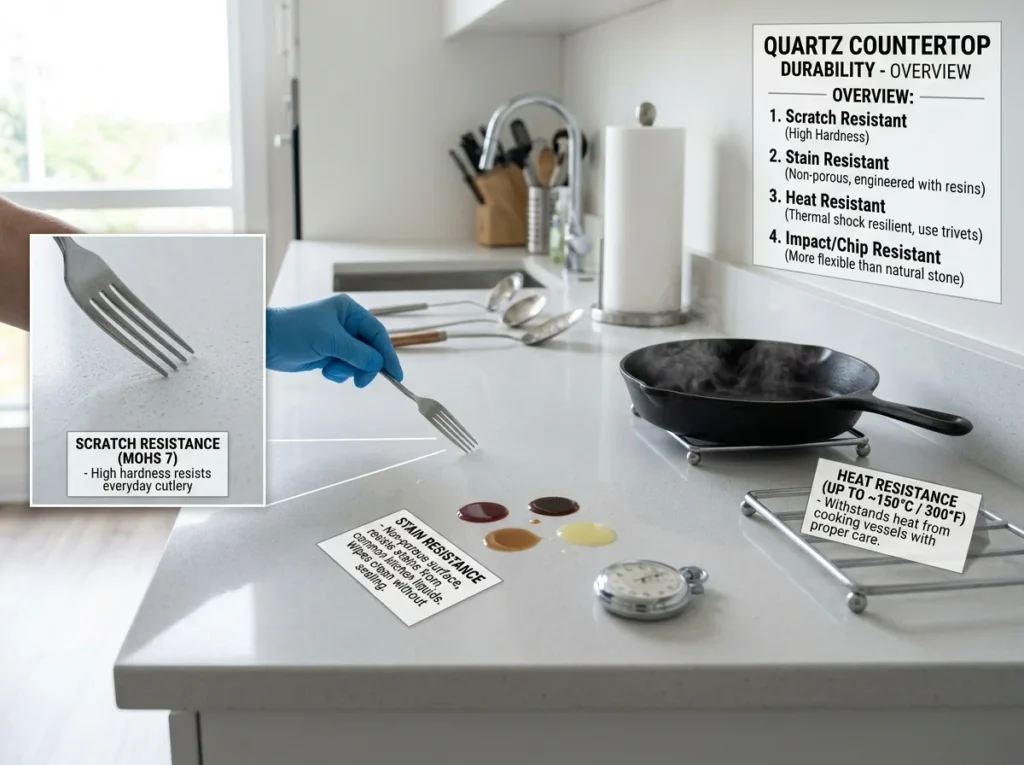
Engineered quartz countertops handle heat decently. Engineered resin can damage from extreme heat. Don’t place hot pans directly on quartz. Use trivets. Important caveat.
Granite handles heat better. Hot pans directly on granite okay. Quartz is slightly less heat-resistant. Not a deal-breaker. Just use trivets.
Scratch Resistance
Quartz is very scratch-resistant. Harder than granite. Normal kitchen use won’t scratch it. Knives won’t harm it. Pans won’t harm it. Very durable.
Stain Resistance
Non-porous means stains don’t happen. Wine spills. Coffee spills. Oils. Nothing soaks in. Wipe it up. Gone. This is huge advantage over granite.
Impact Resistance
Quartz is tough. Won’t chip from normal use. Heavy object dropped hard might cause chip. But this is rare. Very chip-resistant.
Longevity
Engineered quartz countertops last 20+ years easily. Many last 30+ years. Doesn’t degrade. Doesn’t require refreshing. Just keep it clean. Lasts and lasts.
Low-Maintenance Countertops: Why Quartz Wins
Low-maintenance countertops is one of quartz’s biggest advantages.
No Sealing Required
Biggest maintenance advantage. Never seal quartz. Ever. No annual process. No special products. Just skip it. Life is easier.
Granite requires annual sealing. Marble requires regular sealing. Quartz doesn’t. One less thing to worry about.
Easy Cleaning
Warm water and dish soap. That’s all you need. Wipe daily. That’s it. No special cleaners. No complicated process. Simple and easy.
Granite needs special granite cleaner sometimes. Marble needs special marble cleaner. Quartz just needs soap. Super easy.
Stain Prevention
Non-porous means spills don’t matter. Wine. Coffee. Juice. Oil. Nothing stains. Wipe immediately or wait. Doesn’t matter. Won’t stain.
Granite can stain if you’re not careful. Marble stains easily. Quartz is stress-free.
No Special Care
No hot pad requirement (though trivets recommended). No immediate spill cleanup (though immediate is still better). No tip-toeing around it. Just use it. Live on it. Enjoy it.
That’s the power of low-maintenance countertops. Freedom. No worrying. No special care.
Quartz Color Selection: Finding Your Perfect Match
Colors are endless with engineered quartz.
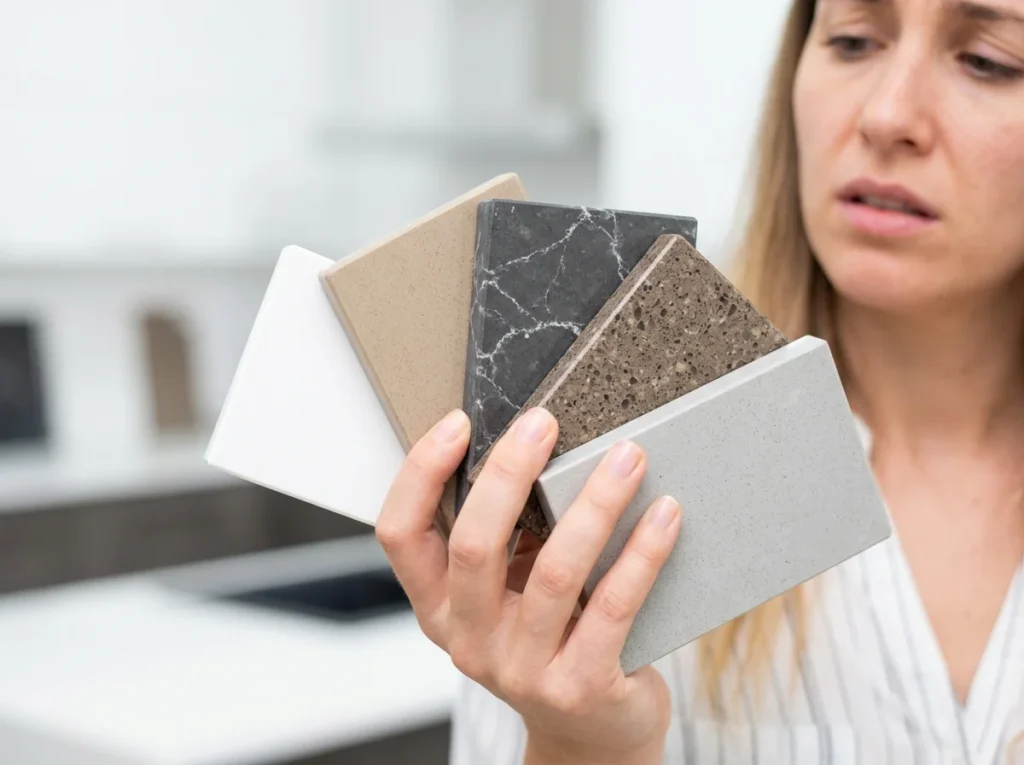
Solid Colors
Pure color. No pattern. Clean. Contemporary. Popular in modern kitchens. Popular for minimalist design. Colors range from white through gray to black. Browns. Reds. Blues. Greens. Endless options.
Light solids brighten spaces. Dark solids create drama. Medium tones are balanced. Pick based on kitchen lighting and style.
Speckled Patterns
Solid color base. Plus flecks of other colors. Adds visual interest. Hides dirt better than pure solid. Still looks contemporary. Very popular.
Speckles can be gold. Silver. Copper. Multiple colors. Creates depth and movement.
Marble Look Patterns
Engineered quartz mimics marble. Veining patterns. Elegant look. Natural stone appearance. Without marble’s maintenance. Very popular option.
Marble-look quartz is practical marble. Beauty without the headaches.
Granite Look Patterns
Mimics granite appearance. Speckled. Varied colors. Natural stone aesthetic. Without granite’s maintenance needs.
Custom Colors
Manufacturers offer custom. Special requests. Unique colors. Special effects. Costs more. Takes longer. But possible.
Color Consistency
Huge advantage over natural stone. Every slab same color. Every kitchen matches. No surprises. No variations. Consistency is reliable.
Quartz Pros and Cons: Honest Assessment
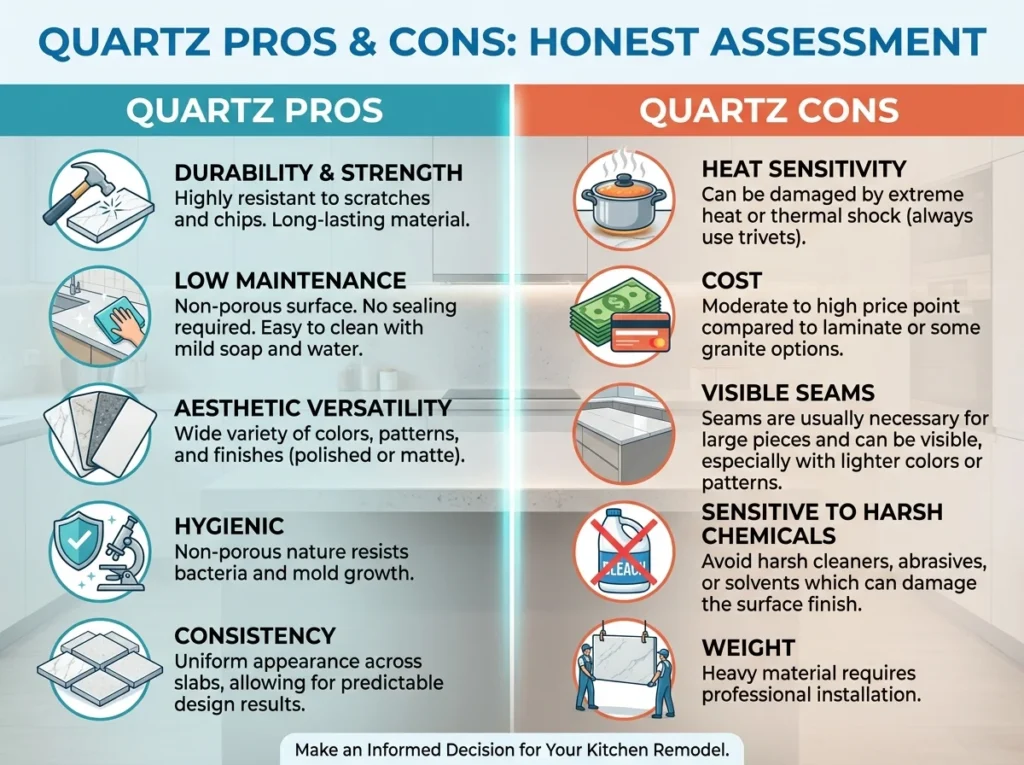
Pros
Non-porous (stain-resistant). Low-maintenance (no sealing). Durable (lasts 20+ years). Consistent color. Beautiful appearance. Variety of colors. Heat-resistant (mostly). Scratch-resistant. Chip-resistant. No special care needed.
Cons
Can damage from extreme heat (use trivets). Cost (higher upfront than laminate). Not as natural-looking as granite (if you prefer natural). Resin can off-gas initially (fades). Limited to engineered colors (can’t get exact match to existing granite).
When Quartz Is Best
Budget-conscious. Want low-maintenance. Want consistency. Want durability. Want beautiful appearance. Don’t want to worry about maintenance. Kids in house. Busy lifestyle.
When Quartz Isn’t Best
Love natural stone look. Want absolute authenticity. Prefer variation in patterns. Don’t mind maintenance. Want granite specifically. Have unlimited budget.
Installation and Cost
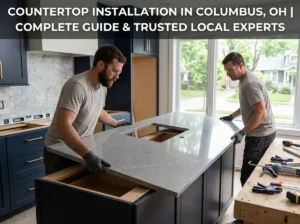
Engineered quartz countertops installation is straightforward.
Installation Process
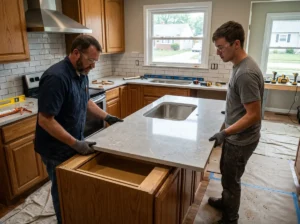
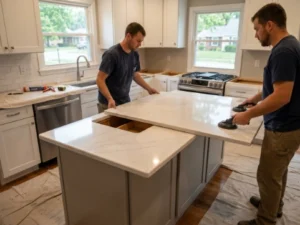
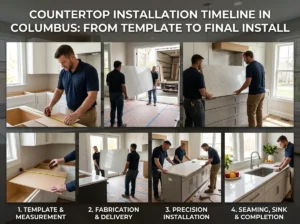
Remove old countertop. Prepare surface. Measure and template. Cut quartz to size. Install edges and backsplash. Seal seams (minimal). Finish details. Takes 3-5 days usually.
Costs
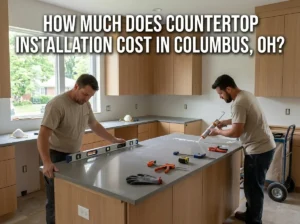
Material: $50-$150 per square foot.
Installation: $50-$100 per square foot.
Total: $100-$250 per square foot installed.
Average kitchen (50 square feet): $5,000-$12,500 total.
Get multiple quotes. Compare material quality. Compare installation quality. Mid-range contractors offer best value.
FAQ About Engineered Quartz Countertops
Ready to choose quartz?
Professional installation and fabrication ensures perfect fit, color matching, and lasting results. Our professional quartz countertop installation and fabrication services handle everything from selection to installation with expert craftsmanship.
Is quartz cheaper than granite?
Similar pricing usually. Quartz $50-$150 per square foot. Granite $60-$100 per square foot. Nearly identical. Factor in maintenance costs. Quartz is cheaper long-term. No sealing costs. Cheaper over 20 years.
Can I put hot pans on quartz?
Not recommended. Resin can damage from extreme heat. Use trivets always. Better safe. Trivets are cheap protection. Takes seconds. Prevents damage.
Does quartz stain?
No. Non-porous. Stains can’t happen. Wine. Coffee. Oils. Nothing soaks in. Wipe it up. It’s clean. This is huge advantage.
How long does quartz last?
20+ years easily. Many last 30+ years. Doesn’t degrade. Doesn’t require refreshing. Just keep clean. Lasts basically forever with normal care.
Should I choose quartz or granite?
Choose quartz if: want low-maintenance. Want consistency. Want stain-free. Busy lifestyle.
Choose granite if: love natural stone look. Don’t mind maintenance. Want unique variation. Prefer granite specifically.
Both are excellent. Choose based on lifestyle and preference.
Can quartz be repaired if damaged?
Small chips can be filled with color-matched epoxy. Usually invisible. Larger damage harder to repair. Contact fabricator. They have repair options. Usually works well.