Marble countertops Hebron OH homeowners choose can bring natural veining and a one-of-a-kind look to kitchens, islands, and bathroom vanities. Marble can last for years when it is installed and cared for well, but it needs more attention than quartz. Acids can etch the surface, and some marble may benefit from sealing based on how absorbent the stone is.
The best choice depends on more than appearance. Slab type, finish, edge style, daily use, fabrication, and your comfort with natural stone care all matter. Buckeye Rock Tops already provides stone countertop work for Hebron homeowners, making it useful to compare these details before choosing a slab.
Is Marble a Good Countertop Material?
Marble can be a good countertop choice when natural beauty matters more to you than having a surface that always looks untouched. Because it is natural stone, every slab has its own veining, shade, and movement. Small changes and signs of use can also become part of the surface over time.
That last point matters. Marble reacts to acidic products, which can dull or etch the finish. Lemon juice, vinegar, and some household cleaners should not be left on the stone. The Natural Stone Institute warns that acids can etch calcareous stones such as marble.
For some homeowners, that care is a fair trade for real natural stone. For others, quartz may be easier to live with.
What Is the Difference Between Carrara and Calacatta Marble?
Carrara marble and Calacatta marble are both Italian marbles, but their appearance can be quite different. Carrara often has a softer overall pattern, while Calacatta is commonly chosen when stronger veining and greater visual contrast are wanted.
The exact look changes from slab to slab because marble is natural. A small sample cannot always show how the full stone will look across a large island or long cabinet run.
This is why slab selection should be part of the design process. Look at the background color, direction of the veins, and how the pattern will move across seams and corners.
If you are still exploring materials, Buckeye Rock Tops offers custom stone countertop options in marble, granite, quartz, and related surfaces.
How Much Do Marble Countertops Cost?
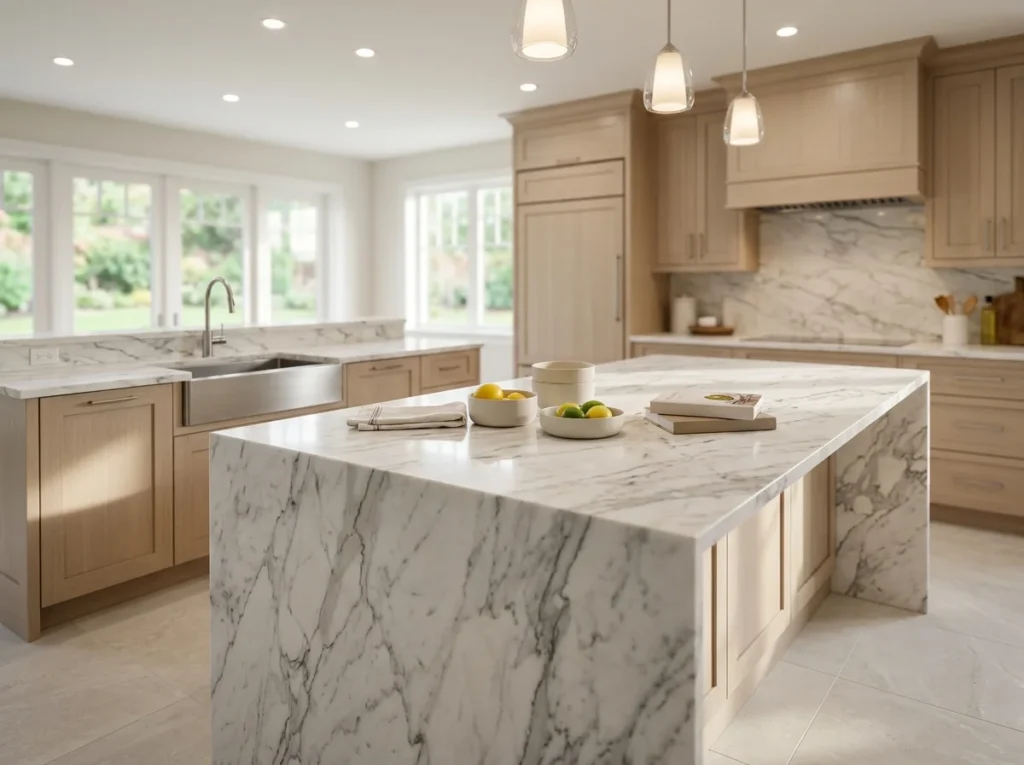
There is no useful single price for every marble project. The final cost depends on the marble type, slab size, amount of material, fabrication, edge work, sink or cooktop cutouts, old-counter removal, and installation.
Current 2026 national data from Angi places the average marble countertop installation around $3,000, with projects ranging much lower or higher based on slab size and project details. Angi also notes that marble variety, color, veining, and origin can change the price. These are national planning figures, not a Hebron quote.
A measured local estimate is more useful because it prices the actual countertop rather than a general average.
What Can Increase the Marble Countertop Price?
A large kitchen island may need more slab material than a small bathroom vanity. Complex layouts can also need more seams, cuts, and finishing.
The slab itself can make a large difference. A marble with a rare pattern or strong veining may fall into a different price level than a more common selection.
Other cost factors may include sink cutouts, cooktop openings, backsplash pieces, edge profiles, demolition, disposal, and cabinet preparation.
When comparing estimates, make sure the same work is included in each quote. One number may look lower because fabrication or removal is being charged separately.
Should You Choose Honed or Polished Marble?
Honed and polished marble use the same natural stone but create a different look and feel.
Polished marble has more shine. The finish can make veining appear stronger and gives the stone a more reflective surface. This can work well in kitchens where you want the counter to stand out.
Honed marble has a softer, lower-sheen finish. Some homeowners prefer it because normal wear may blend into the softer appearance more easily.
Neither finish prevents etching. Acid can still affect marble. The choice should be based on the look you prefer and how comfortable you are with the way natural stone changes through use.
What Marble Colors and Patterns Work Well in Hebron Homes?
The right marble should work with the whole room, not only the cabinet color. Flooring, backsplash, wall color, hardware, lighting, and room size all change how a slab looks after installation.
White marble with soft gray movement can work well with wood, white, navy, or dark cabinets. Stronger veining can turn an island into the main feature of a larger kitchen.
Always view a slab or large sample in good light when possible. Veining that looks subtle in a small piece may become much more noticeable across a full countertop.
For a quieter room, choose softer movement. For a stronger design feature, look for more contrast between the stone background and veins.
Is Marble Good for a Kitchen Island?
Yes, marble can work well on an island when you understand how the surface behaves. A large island also gives natural veining more room to show, which can make the slab a major part of the kitchen design.
A marble island will still need sensible daily care. Use cutting boards for food prep and clean acidic spills without leaving them on the stone.
Think about where the island sits as well. A heavily used prep island may show signs of use faster than one used mostly for seating and serving.
For homeowners who enjoy natural patina, that change may be part of marble’s appeal. If you want the surface to stay looking almost unchanged, another material may fit better.
Marble vs. Quartz: Which Is Easier to Own?
Quartz is usually easier to maintain because it is engineered and typically nonporous. Marble is natural stone and needs more care around acids, stains, and cleaning products.
The design difference is just as important.
Quartz can copy marble-style veining, but it does not have the exact natural variation of a marble slab. Marble gives you real mineral movement that cannot be repeated in exactly the same way.
For a busy household that wants simple cleaning, quartz may make more sense. If genuine natural stone is the priority and you accept that the surface can develop character, marble may be the better fit.
The choice is less about which material is “better” and more about how you want to use and maintain the counter.
Marble vs. Granite: What Changes?
Both marble and granite are natural stones, but they do not behave exactly the same way.
Marble is more sensitive to acids. This is why lemon, vinegar, and similar products can create etch marks. Granite tends to be less affected by everyday kitchen acids, though care needs still depend on the exact stone.
Their designs also differ. Marble is often chosen for flowing veins and a softer look. Granite may have more mineral speckling, movement, and color variation.
If you are deciding among several surfaces, compare how each one handles daily use instead of choosing from photos alone.
Does Marble Need to Be Sealed?
Some marble countertops can benefit from marble sealing, but there is no reliable rule that every stone must be sealed on the same schedule.
The Natural Stone Institute explains that sealing needs depend on the stone. A sealer can help resist staining, but it does not make marble stain-proof. It also does not stop acid from etching the surface.
This distinction is important. People sometimes expect a sealer to protect marble from every type of damage. It cannot.
Ask the fabricator about the exact slab installed in your home. They can explain its care needs and whether sealing is recommended.
For more help with day-to-day upkeep, Buckeye Rock Tops has a marble care and maintenance guide that covers the material in greater detail.
How Do You Clean Marble Countertops?
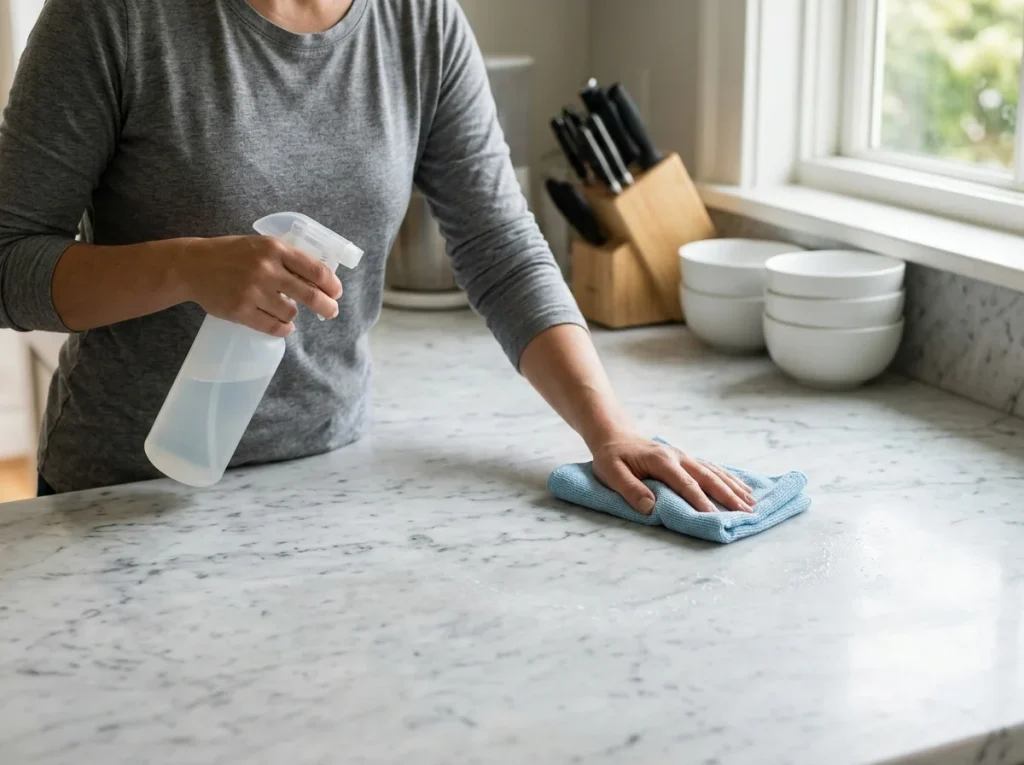
Good marble maintenance starts with gentle cleaning. Avoid acidic cleaners and rough products that may harm the finish.
The Natural Stone Institute recommends neutral cleaners made for stone or mild dish detergent with warm water. It also warns against products containing lemon, vinegar, and other acids because they can dull or etch marble.
For normal use, a few habits can make care easier:
- Wipe spills before they sit for long.
- Use a cutting board for food prep.
- Keep acidic cleaners away from the stone.
- Use products made for natural stone.
- Ask before using stain removers or polishing products.
You do not need an aggressive daily cleaning routine. Simple, stone-safe care is usually the better approach.
What Is Marble Etching?
Etching happens when acid reacts with the marble surface. It can leave a dull spot or change the finish even when there is no dark stain.
This is different from staining.
A stain involves material moving into the stone. An etch is a change to the surface itself. The Natural Stone Institute notes that some acidic materials can both etch and stain, while others may only affect the finish.
This is why wiping lemon juice or vinegar from marble quickly matters. It is also why normal kitchen cleaners should be checked before use.
If etching does happen, ask a stone professional about the right repair rather than trying strong household chemicals.
How Does Marble Countertop Installation Work?
Professional marble countertop installation begins with accurate measurements and planning. The fabricator needs the cabinet layout, sink type, appliance openings, backsplash plan, overhangs, edges, and seam locations before cutting the stone.
The slab is then fabricated for the actual room. Edges are shaped, openings are cut, and the pieces are prepared for fitting.
Marble also needs careful handling because it is heavy natural stone. Support, seam placement, and cabinet condition all matter.
Buckeye Rock Tops provides marble countertop installation along with custom fabrication for kitchen and bathroom projects in Central Ohio.
Good installation should make the countertop feel like it was made for the room, not simply placed on top of the cabinets.
When Should You Replace an Existing Countertop With Marble?
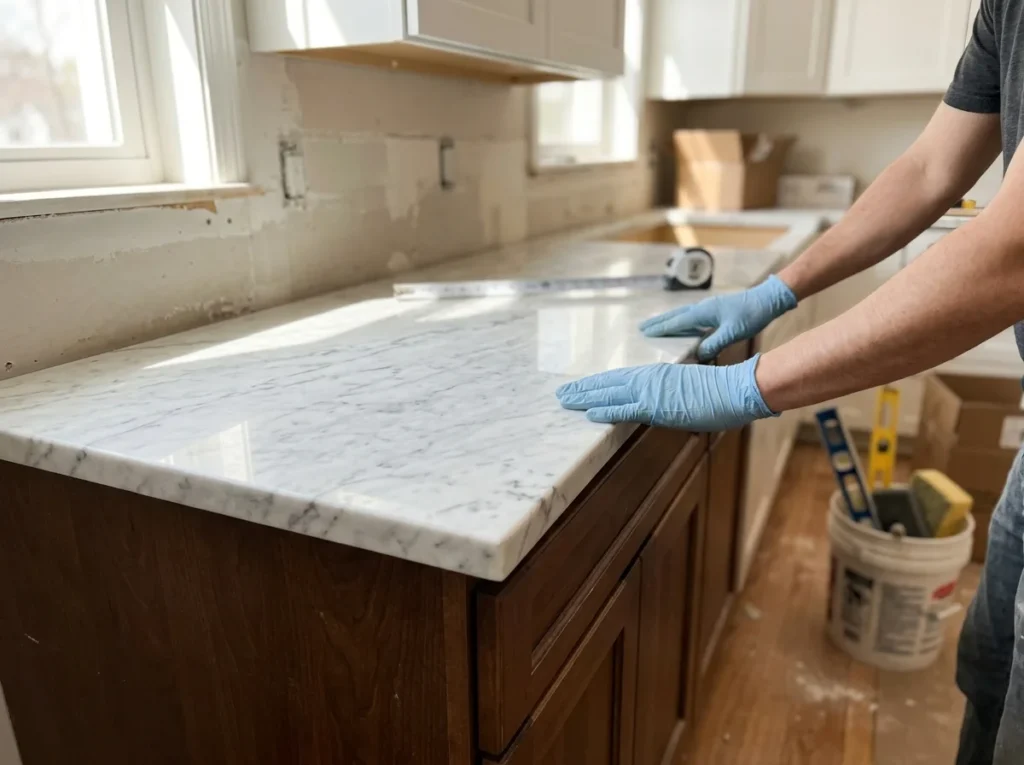
Marble countertop replacement may make sense when the current surface is damaged, no longer fits your design, or needs to change because the cabinets or layout are being updated.
A new countertop is not always needed just because the existing one is older.
If it is still in good condition and works with the planned room, keeping it could save part of the remodeling budget.
Replacement becomes more useful when you are installing new cabinets, adding an island, changing the sink, or creating a different layout. Those changes often make it hard to reuse the old countertop.
Before ordering marble, make sure the cabinets are level, stable, and ready for the new stone.
What Should a Marble Countertop Estimate Include?
A useful estimate should explain the full project, not only the slab price.
Ask what is included for measuring, material, fabrication, sink or cooktop cutouts, edges, seams, backsplash, delivery, removal, and installation. If sealing or other stone treatment is recommended, ask if that is included as well.
You should also ask which slab the quote is based on. A different marble selection can change the total.
Clear estimates make comparison easier. They also reduce the chance of learning halfway through the project that a major part of the work was not included.
FAQs About Marble Countertops in Hebron
Is Carrara or Calacatta marble better?
Neither is automatically better. Carrara marble often works well when you want softer movement, while Calacatta marble may appeal more when stronger veins and contrast are the goal. Look at the actual slab before deciding.
Do marble countertops stain easily?
Marble can absorb stains depending on the stone and exposure. Prompt cleaning and proper care can help. A suitable sealer may add stain resistance, but it cannot make the stone completely stain-proof.
Can lemon juice damage marble?
Yes. Acids such as lemon and vinegar can etch marble and dull the finish. Clean acidic spills quickly and avoid acidic cleaning products.
Is honed marble easier to maintain?
Honed marble can hide some signs of use differently because it has less shine, but it can still stain or etch. It should not be treated as maintenance-free.
Can marble be used for bathroom vanities?
Yes. Marble can work well for vanity tops when its care needs fit the household. It is especially useful when the natural pattern is part of the bathroom design.
Should I see the whole marble slab before buying?
Yes, when possible. Natural marble can have major changes in veining and color across one slab. A small sample may not show how the finished countertop will look.
Choose Marble for the Look and Lifestyle You Want
The best marble countertops Hebron OH homeowners choose should fit both the room and the way the surface will be used. Marble offers natural variation that engineered materials cannot fully copy, but that beauty comes with more care around stains, acids, and cleaning.
Compare the actual slab, finish, edge style, and fabrication plan before making a decision. Think about whether you are comfortable with natural patina and the possibility of etching instead of choosing marble only from a showroom photo.
When you are ready to discuss custom marble countertops, slab options, measurements, or replacement work, you can request a marble countertop estimate from Buckeye Rock Tops for your Hebron project.