Quartzite countertops in Heath, OH can be a strong choice if you want real natural stone with bold veining and good heat resistance. Quartzite starts as sandstone and changes under heat and pressure into a hard natural stone. It works well for kitchens, islands, and bathroom vanities, but it usually needs more care than engineered quartz.
Cost can also vary a lot. The slab, counter size, edge style, cutouts, seams, fabrication, and installation all affect the quote. Buckeye Rock Tops provides custom countertop services across Central Ohio, though homeowners should confirm quartzite slab availability before planning a specific project.
What Is Quartzite?
Quartzite is a natural stone that forms when sandstone is changed by high heat and pressure. This process makes the stone hard and gives many slabs a flowing pattern that can look similar to marble.
That natural origin is important. Quartzite is not the same thing as quartz.
Quartzite comes from the earth as stone. Quartz countertops are engineered from minerals mixed with resins and other materials. Their names sound similar, but the two surfaces have different care needs, colors, and heat performance.
A real quartzite slab will also have natural variation. Veins, shades, and movement can change across the same piece of stone. That is part of what makes each counter different.
Is Quartzite Durable Enough for a Busy Kitchen?
Yes. Quartzite durability is one of the material’s main strengths. MSI describes quartzite as a very hard natural stone that works well for countertop surfaces because of its strength and long-lasting structure.
This makes it useful in kitchens where counters see regular food prep, dishes, and daily traffic.
Still, durable does not mean impossible to damage. Edges can chip if they take a hard hit. Some quartzite varieties can also absorb spills if the surface is not properly protected.
A cutting board is still a smart habit. It protects both the stone and your knives. Clean up spills early as well, especially around oils, wine, coffee, and strongly colored food.
Is Quartzite Heat Resistant?
Quartzite has strong heat resistance because it is natural stone formed under very high heat and pressure. MSI notes that it performs well around cooking areas, but still recommends hot pads or trivets to protect the stone treatment and reduce the risk from sudden temperature changes.
That is the safer way to use any stone counter.
A hot pan may not damage quartzite as easily as it could damage an engineered surface, but there is little reason to test that limit. Keep a trivet close to the stove and use it.
This simple habit can also protect any sealer that has been applied to the surface.
How Much Do Quartzite Countertops Cost?
The quartzite countertop cost depends on the slab and the amount of fabrication your project needs. Current national planning data from HomeAdvisor places installed quartzite at roughly $80 to $220 per square foot. That is a broad 2026 range, not a Heath-specific quote.
A small vanity and a large kitchen island can fall into very different price ranges even when they use the same type of stone.
Your final estimate can change because of:
- Slab selection and availability
- Countertop size
- Number of slabs needed
- Sink and cooktop cutouts
- Edge design
- Seam placement
- Backsplash pieces
- Old countertop removal
- Cabinet preparation
- Delivery and installation
Rare or dramatic slabs can also cost more than simpler quartzite patterns.
The best budget starts with real measurements and a specific slab, not only a cost-per-square-foot number.
Why Can Two Quartzite Quotes Be So Different?
Two quotes may cover different work. One company may include templating, cutouts, edges, installation, and removal. Another may charge for some of those items separately.
Slab quality and pattern also matter.
A common light quartzite may not cost the same as a rare slab with strong blue, green, gold, or dramatic gray movement. Large islands can also create extra cost if the layout needs another slab.
Before comparing totals, ask each fabricator to price the same scope.
You should know what is included for material, measuring, fabrication, seams, edge work, delivery, and installation. A clear quote is much easier to compare than a low starting price with several add-ons later.
Quartzite vs. Quartz: What Is the Difference?
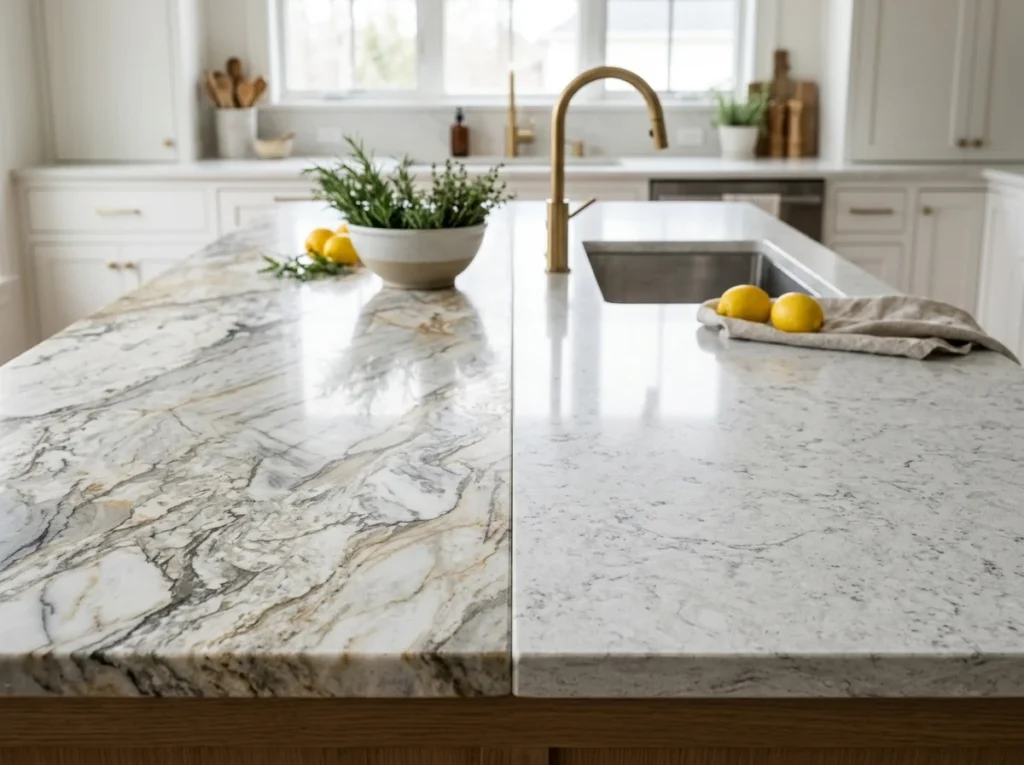
Quartzite is natural stone. Quartz is an engineered surface. That one difference changes how both materials look and how you care for them.
Quartz is nonporous and normally does not need sealing. Quartzite is natural and can be porous, so sealing may be recommended to improve stain resistance. Quartzite also handles strong heat better than engineered quartz, though trivets are still the safer choice.
Quartz gives you more control over pattern and color. Quartzite gives you natural movement that cannot be repeated exactly.
If easy care matters most, Buckeye Rock Tops’ guide to engineered quartz can help you compare that option before choosing natural stone.
Quartzite vs. Granite: Which Is Better?
The quartzite vs granite choice usually comes down to appearance, slab availability, budget, and the exact stone you like.
Both are natural materials. Both can handle busy kitchen use when they are properly fabricated and cared for.
Quartzite often appeals to homeowners who like a lighter stone with long veins and a marble-style look. Granite commonly has more mineral speckling and wider color changes, though every slab is different.
Quartzite may also cost more depending on the specific slab and how difficult it is to source.
There is no clear winner for every home. Look at full slabs, not only small samples, and compare the care needs of the exact stones you are considering.
Does Quartzite Need to Be Sealed?
Many quartzite counters benefit from quartzite sealing, but there should not be one fixed schedule for every slab.
The Natural Stone Institute explains that some natural stones benefit from sealing while others may not need it. It also notes that a sealer helps resist stains but does not make stone completely stain-proof.
MSI recommends regular sealing for many quartzite surfaces because natural quartzite can absorb moisture and spills. The exact timing can depend on the stone and how heavily the counter is used.
Ask the fabricator about the slab you select rather than following a general internet rule.
How Do You Clean Quartzite?
Daily quartzite maintenance should stay simple. Use a soft cloth and a cleaner made for natural stone. MSI recommends pH-neutral cleaning products and warns against harsh or acidic cleaners that may harm the surface or stone treatment.
Spills should also be cleaned early.
For regular use:
- Wipe spills when you notice them.
- Use a pH-neutral stone cleaner.
- Avoid rough cleaning pads.
- Use cutting boards for food prep.
- Keep hot cookware on trivets.
- Follow the care advice for your exact slab.
The Natural Stone Institute also recommends mild soap and water for many basic natural-stone cleaning needs.
You do not need to attack the surface with strong cleaners. Gentle care is usually the safer choice.
Which Quartzite Colors Work Well in Heath Homes?
Quartzite comes in light, warm, dark, and highly patterned slabs. The right choice depends on your cabinet color, flooring, backsplash, room size, and natural light.
Heath is in Licking County, about 35 miles east of Columbus, so homeowners are part of the wider Central Ohio market.
For smaller kitchens, a light quartzite can help keep the room feeling open. White or warm cream slabs often work well with wood cabinets.
Gray-veined stone can create a cleaner, cooler look. More dramatic slabs can work well on a large island where the natural movement has enough space to show.
Take your cabinet and flooring samples when you view the slab. Stone can look very different under showroom lighting than it does in your home.
Should You Choose Polished or Honed Quartzite?
A polished finish has more shine and reflection. It can make colors and veining look stronger, especially in kitchens with good natural light.
A honed finish has less shine. It creates a softer appearance and can work well in simple or warm kitchen designs.
Neither finish should be chosen only from a photo.
Ask to see a larger sample and touch the surface. Think about cleaning, lighting, and how much attention you want the stone to draw.
The finish may also change the care needs of the slab. Ask what cleaning and sealing routine is recommended before placing the order.
Which Edge Style Works Best?
A simple edge often works best when the slab already has strong veining. It keeps the design clean and lets the stone remain the main feature.
More detailed edge profiles can suit traditional cabinets or larger kitchens.
A waterfall edge is another option for an island. The stone continues down the side instead of stopping at the top. This can show more of the slab pattern, but it also requires more material and careful fabrication.
Discuss the edge before your final quote.
The edge style can affect cost, slab use, and how the pieces are cut. Buckeye Rock Tops explains its broader custom countertop fabrication work for projects that require precise measurements, cuts, and finished edges.
Can Quartzite Be Used for a Kitchen Island?
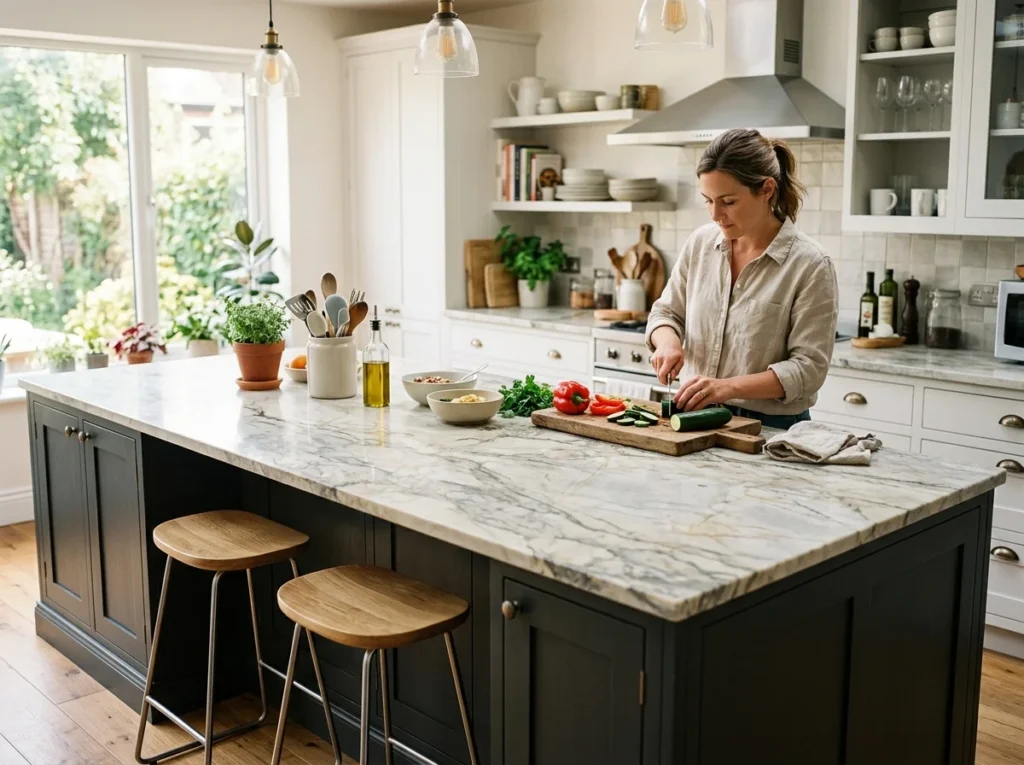
Yes. Quartzite kitchen countertops can work especially well on islands because a large surface gives natural veining more room to show.
An island can also become the visual center of the room.
Before choosing the slab, check the finished island size and overhang. A large island may need more than one piece of stone, depending on the slab size and layout.
Seam position should also be planned before cutting begins.
If the island includes a sink or cooktop, those openings must be included in the fabrication plan. The cabinets below also need to be level and ready for the weight of natural stone.
Is Quartzite Good for Bathroom Vanities?
Yes. Quartzite can also work for bathroom vanity tops.
Its natural pattern can add more detail to a simple bathroom, and a smaller vanity may allow you to use a slab remnant or smaller piece depending on availability.
Moisture care still matters because quartzite is natural stone.
Ask whether the selected slab should be sealed, especially around sink areas. Keep soap, cosmetics, hair products, and other residue from sitting on the surface longer than needed.
The sink style should also be decided before fabrication so the cutout and faucet holes are placed correctly.
Can Quartzite Work Outdoors?
Natural quartzite may be considered for some outdoor uses because it does not contain the same resin binders used in engineered quartz. MSI also lists outdoor use among the possible applications for quartzite.
Still, an outdoor countertop faces more than sunlight.
Ohio freeze-thaw cycles, moisture, weather exposure, installation details, and the exact stone all matter. Do not assume every quartzite slab is suitable for every outdoor kitchen.
Ask the fabricator and stone supplier if the chosen material is approved for exterior use in your climate before ordering it.
That is more useful than relying on a general “quartzite is outdoor safe” claim.
What Happens During Quartzite Installation?
Professional quartzite installation starts with accurate measurements. Sink size, cooktop openings, cabinet layout, overhangs, edges, backsplash, and seam locations need to be known before the slab is cut.
Natural stone is heavy, so the base cabinets must also be stable and level.
The basic process may include templating, slab layout, fabrication, edge finishing, cutouts, delivery, fitting, seam work, and cleanup.
Careful fabrication matters because natural veining can cross several pieces. Poor seam planning can break the visual flow of the stone.
Before booking a Heath project, you can check the Central Ohio areas currently listed by Buckeye Rock Tops. Heath is not shown as a dedicated location on the current published list, so it is best to confirm service for your address first.
When Should You Replace an Existing Countertop?
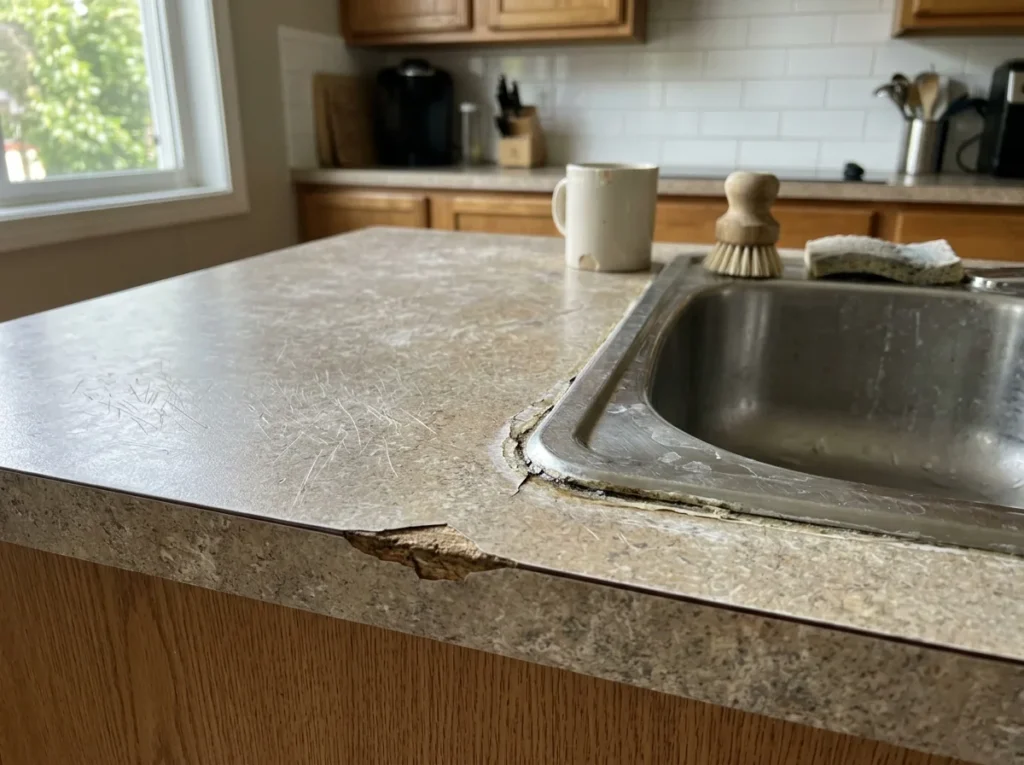
Quartzite countertop replacement may make sense when the current surface is cracked, badly worn, difficult to clean, or no longer works with your kitchen design.
Replacement may also be needed when cabinets, sinks, or the room layout change.
Do not replace a usable counter only because it is older. If it still fits your plan and is in good condition, keeping it may save part of the remodeling budget.
If you do replace it, check the cabinets before ordering the new stone. Loose, damaged, or unlevel cabinets should be repaired first.
A heavy natural stone surface needs a sound base.
FAQs About Quartzite Countertops in Heath
Is quartzite harder than granite?
Quartzite is known as a very hard natural stone. The exact performance can vary by slab, so it is better to compare the actual materials being considered rather than assume every quartzite is identical.
Does quartzite stain easily?
Quartzite can resist many stains when properly cared for, but natural stone can be porous. Some slabs benefit from sealing, and spills should still be cleaned quickly.
Is quartzite the same as quartz?
No. Quartzite is natural stone formed from sandstone. Quartz countertops are manufactured surfaces made with minerals and binders. Quartz normally needs less routine maintenance because it is nonporous.
How much does quartzite cost?
Current national 2026 data places many installed quartzite counters around $80 to $220 per square foot. Your Heath project may be lower or higher based on the slab, size, edges, cutouts, fabrication, and installation.
Can you put hot pans on quartzite?
Quartzite has strong heat resistance, but trivets are still recommended. They help protect the stone treatment and reduce the risk from sudden temperature changes.
How often should quartzite be sealed?
There is no schedule that fits every slab. Sealing needs depend on the specific stone and how it is used. Ask the supplier or fabricator what is recommended for your selected quartzite.
Is Quartzite Right for Your Heath Home?
Quartzite countertops in Heath, OH can make sense when you want the natural movement of stone, strong heat performance, and a surface that can handle regular kitchen use. The trade-off is that quartzite usually needs more attention to sealing and cleaning than engineered quartz.
Choose the slab based on your real room, not only a small sample. Compare the veining, finish, edge, sink layout, fabrication needs, and care instructions before making a final choice.
Buckeye Rock Tops’ published services currently focus on granite, quartz, marble, and custom fabrication rather than listing quartzite as a separate service. If you want quartzite for a Heath kitchen, island, or vanity, you can ask about slab availability, service coverage, and a project estimate before planning the installation.