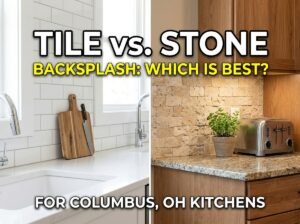
Choosing between tile and natural stone is one of the biggest decisions when planning a kitchen backsplash. Both can protect the wall behind your countertop and create a finished look, but they offer different benefits. Tile vs stone backsplash in Columbus, OH comes down to more than appearance. Cost, cleaning, grout, sealing, design choices, and installation all deserve consideration.
For many Columbus homeowners, ceramic or porcelain tile is a practical choice because it offers many styles and price points. Natural stone can be a better fit when you want unique patterns, a more natural appearance, or a backsplash that coordinates closely with a stone countertop. Buckeye Rock Tops can help homeowners compare countertop and backsplash materials based on their kitchen design and installation needs. This guide compares both options so you can choose based on how your kitchen actually works.
Tile vs Stone Backsplash: Which Is Better?
There is no single winner for every kitchen. Tile is usually the more flexible choice for homeowners who want many colors, patterns, and price options. Natural stone is worth considering when you want natural variation or a more continuous connection with a stone countertop.
The right choice depends on your budget, maintenance preferences, kitchen design, and the type of installation you want.
A simple ceramic subway tile backsplash can create a clean, classic kitchen. A full-height natural stone backsplash can create a stronger focal point and connect visually with granite, quartz, or marble countertops.
What Is the Difference Between Ceramic Tile and Natural Stone?
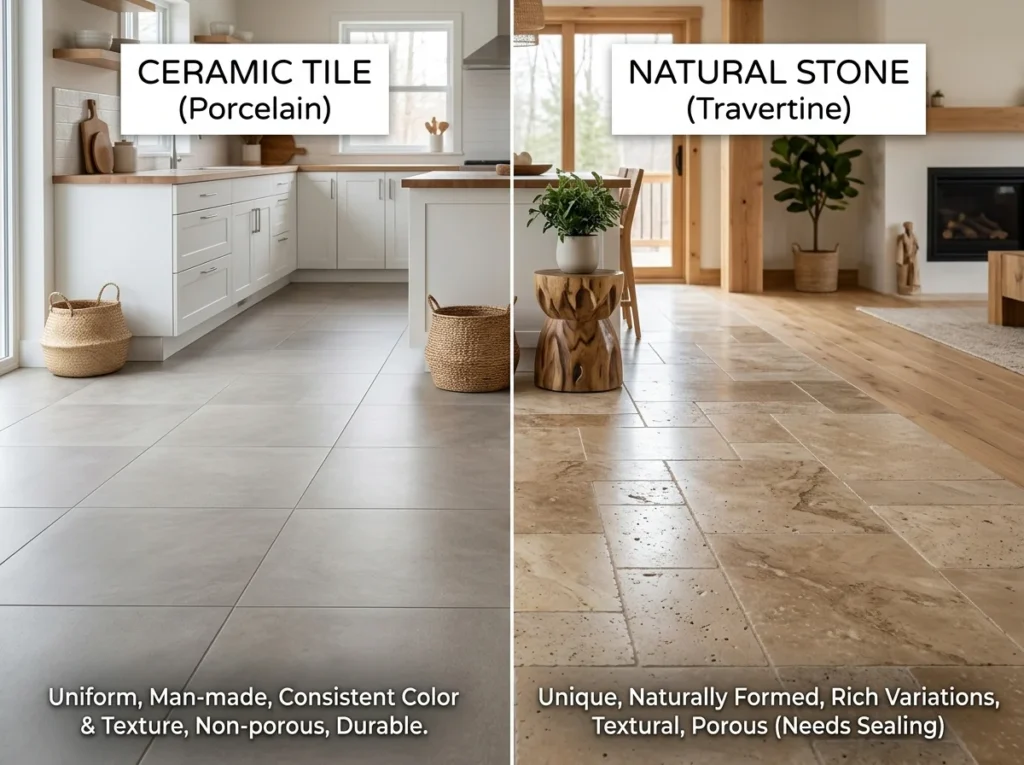
Ceramic and porcelain are manufactured materials made from processed clay and other materials. Natural stone is quarried and cut into usable pieces.
That difference affects appearance. Tile can provide consistent colors and patterns from piece to piece, while natural stone often has natural variations in color, texture, and veining.
Natural stone options can include marble, granite, slate, and travertine. Each stone has its own characteristics and care requirements.
Tile provides more predictable design control. Stone gives you a more natural and varied appearance.
How Does Cost Compare?
The cost difference between tile and stone depends heavily on the product and installation.
Current cost guides place ceramic tile at roughly $6–$28 per square foot installed and porcelain at about $7–$30. Natural stone tile can range from about $7–$45 installed, depending on the type of stone and installation.
Columbus estimates also vary considerably. One 2026 local estimate places typical backsplash projects around $550–$2,800, with larger projects using premium natural stone potentially reaching higher.
The final price is not based on material alone. Wall preparation, old backsplash removal, outlet cuts, corners, pattern complexity, grout, and installation time can all affect the project.
Is Tile Easier to Maintain?
For many homeowners, yes.
Ceramic and porcelain tile generally need routine cleaning rather than special stone sealing. The grout still needs attention because it can collect food residue and discoloration over time.
A simple tile layout can also make individual pieces easier to replace if one becomes damaged.
Porcelain is particularly dense and is widely used in areas where moisture resistance is useful. However, the exact characteristics depend on the product, so homeowners should check the manufacturer’s specifications before choosing a tile.
Does Natural Stone Need More Maintenance?
Usually, natural stone requires more care than standard ceramic tile.
Some natural stones are porous and may require sealing to help protect the surface. The maintenance requirements depend on the specific stone and finish.
For example, marble and travertine should not be treated exactly like porcelain tile. The cleaning products and sealing schedule should follow the stone manufacturer’s recommendations.
This does not make stone a bad choice. It simply means homeowners should be comfortable with the additional care before selecting it.
Which Has Better Design Versatility?
Tile generally wins when it comes to sheer variety.
Ceramic and porcelain tile are available in many sizes, colors, textures, finishes, and patterns. Subway tile remains a popular option, but homeowners can also choose large-format pieces, mosaics, geometric shapes, or decorative accents.
Natural stone has a different type of versatility. Its natural variation can become the main design feature rather than relying on a printed or manufactured pattern.
If you want a very specific color or layout, tile may offer more control. If you want natural veining and variation, stone may be the better fit.
Which Works Better With a Stone Countertop?
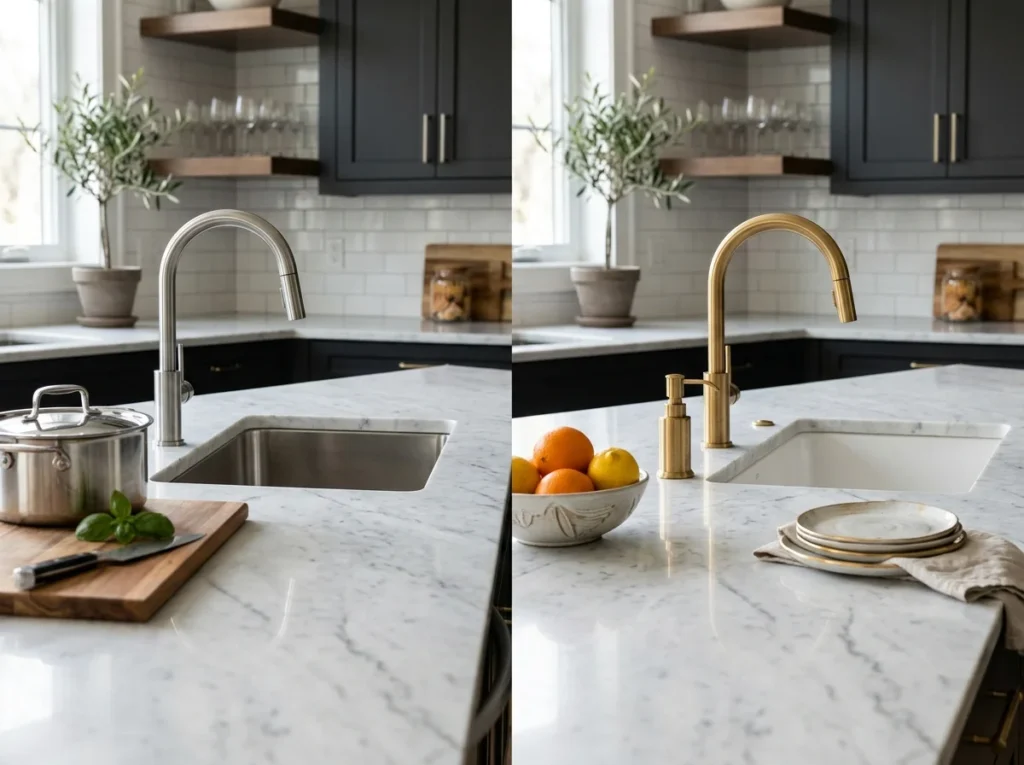
Both can work well.
A tile backsplash can provide contrast against a granite, quartz, or marble countertop. For example, a simple neutral tile can allow a strongly patterned countertop to remain the focal point.
A natural stone backsplash can create a more connected look. Matching or complementary stone can visually extend the countertop up the wall. If you are choosing both surfaces at the same time, this guide to choosing kitchen countertop materials can help you compare countertop options that work with your backsplash.
Buckeye Rock Tops specializes in granite, quartz, and marble surfaces and also provides tile backsplash installation in Central Ohio. Its service information includes full-height stone backsplash work and tile installation using ceramic, porcelain, and glass.
What About Grout Lines?
Grout lines are an important part of the comparison.
A tile backsplash is normally made from multiple individual pieces, so grout is part of the finished design. Smaller tiles and more complex patterns generally create more grout lines.
A large-format tile can reduce the number of joints. A slab-style natural stone backsplash can reduce them even further.
Fewer joints can make cleaning easier, but that does not automatically make a slab or large-format installation the right choice. Material cost, fabrication, wall dimensions, and installation requirements also matter.
Which Is Better for Moisture?
Both properly installed tile and natural stone can work well for kitchen backsplash applications.
The important part is the complete installation system. The wall needs to be suitable for the material, and areas exposed to regular water should receive appropriate preparation.
Tile and grout can help protect the wall from normal kitchen splashes. Natural stone can do the same when correctly installed and maintained.
Buckeye Rock Tops states that waterproofing is included with its stone backsplash installation.
Which Is Better for a Columbus Kitchen?
Columbus homeowners should consider how they actually use the kitchen rather than choosing material based only on trends.
If your priority is easy design changes, many color choices, and a broad range of price points, tile is a strong option.
If your priority is natural variation, a premium appearance, or coordination with a stone countertop, natural stone may be worth the additional investment and maintenance.
The local climate does not make one material automatically better for an indoor backsplash. Your kitchen’s moisture exposure, cleaning habits, design, and surface conditions matter more.
How Does Installation Differ?
Both materials require careful installation, but the work can vary depending on the product.
Tile installation involves measuring, layout planning, cutting, setting the pieces, grouting, and finishing the edges. Detailed patterns can require more cuts and planning.
Natural stone can require precise measuring and cutting, particularly when using larger pieces or a full-height design. Stone also needs appropriate handling and, depending on the material, sealing.
A professional kitchen backsplash contractor should inspect the wall before installation and explain how the chosen material will be handled.
Can You Use Subway Tile Instead of Stone?
Absolutely.
Subway tile is one of the simplest ways to create a classic kitchen backsplash. It can be installed in a traditional running-bond pattern or arranged in a stacked, vertical, or other layout.
Changing the grout color can also change the appearance. Matching grout creates a quieter look, while contrasting grout makes the tile pattern more visible.
For homeowners who want a timeless appearance without using natural stone, a well-installed subway tile backsplash can be a practical choice.
Is Natural Stone Worth the Extra Cost?
It can be, particularly when the appearance is a major part of the kitchen design.
Natural stone offers variations that manufactured tile cannot perfectly reproduce. It can also coordinate beautifully with natural stone countertops. Homeowners comparing different surfaces can also review this countertop material comparison guide before making a final selection.
However, the higher material cost does not automatically mean a better backsplash. If easy maintenance, predictable color, and budget flexibility are more important, tile may be the better fit.
Think about the kitchen as a whole rather than treating the most expensive material as the best option.
What Should You Ask a Backsplash Installer?

Before hiring professional backsplash installers, ask for details about the entire installation.
Questions worth asking include:
- Is wall preparation included?
- Will the old backsplash be removed?
- Who supplies the tile or stone?
- How will outlets and corners be handled?
- What grout will be used?
- Does the stone require sealing?
- Is waterproofing included where needed?
- How will the layout be planned?
- Are trim and edge finishes included?
- What cleanup is included?
A clear estimate makes it much easier to compare contractors.
Frequently Asked Questions
Is tile or stone better for a kitchen backsplash?
Neither is universally better. Tile offers more design and price flexibility, while natural stone provides natural variation and can coordinate closely with stone countertops.
Is ceramic tile cheaper than natural stone?
Often, yes. Current cost guides generally show ceramic tile at a lower installed price range than many natural stone options, although premium tile can also become expensive.
Does natural stone backsplash need sealing?
Some natural stones require sealing, but the exact requirements depend on the stone and finish. Follow the manufacturer’s maintenance recommendations.
Is porcelain better than ceramic for a backsplash?
Not automatically. Both can work well. Porcelain is denser, while ceramic offers many affordable styles and finishes. Choose based on the product specifications and your kitchen needs.
Is travertine a good backsplash material?
Travertine can create a warm, natural appearance, but it may require more maintenance than many ceramic or porcelain products. Consider sealing and cleaning requirements before choosing it.
Which backsplash is easiest to clean?
Smooth ceramic or porcelain tile with suitable grout is generally straightforward to maintain. Large-format surfaces can reduce grout lines, which may also simplify cleaning.
Tile or Stone: Which Should You Choose?
The best tile vs stone backsplash in Columbus, OH choice depends on what matters most in your kitchen.
Choose tile if you want a wide selection of colors and patterns, easier design changes, and more control over the budget. Ceramic, porcelain, and subway tile can all create attractive and practical backsplashes.
Choose natural stone if you prefer natural variation, want to coordinate closely with a stone countertop, or want a full-height backsplash to become a major feature of the kitchen.
Buckeye Rock Tops offers both tile backsplash installation in Columbus and stone backsplash installation in Columbus, including ceramic, porcelain, and glass tile as well as full-height stone backsplash options. The best result starts with the same basic steps for either material: inspect the wall, plan the layout, choose suitable materials, and make sure the installation details are clear before work begins. Contact Buckeye Rock Tops to discuss your backsplash and countertop project.