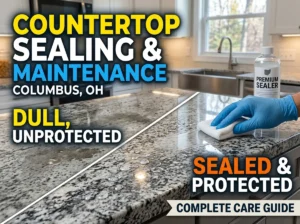
Proper countertop care starts with knowing what material you have. Granite, marble, quartz, and other stone surfaces do not all need the same maintenance. Natural stone may benefit from sealing, while engineered quartz generally does not require routine sealing. Cleaning methods also matter because the wrong product can dull or damage some surfaces.
For homeowners in Columbus, countertop sealing and maintenance should be part of regular kitchen care, especially for porous natural stone. Buckeye Rock Tops can help homeowners understand the care requirements for different countertop materials.This guide explains when sealing is useful, how to clean countertops, what can cause stains or etching, and when professional help makes sense.
Do All Countertops Need Sealing?
No. Natural stone and engineered quartz should not be treated the same way.
Granite and marble are natural stones that may need an impregnating sealer to reduce the chance of liquids penetrating the surface. The right sealing schedule depends on the stone, finish, sealer, and how the countertop is used.
Engineered quartz is manufactured differently and is generally non-porous, so routine sealing is not normally required.
Before applying any product, identify the countertop material and check the manufacturer’s care instructions.
Why Is Countertop Sealing Important?
Sealing is mainly about stain prevention, not making a countertop completely stain-proof.
An impregnating sealer penetrates suitable natural stone and helps reduce liquid absorption. This gives homeowners more time to clean spills before they can penetrate deeply.
Sealing does not prevent every type of damage. For example, sealing does not stop marble from reacting with acidic foods. The Natural Stone Institute notes that sealing can help with staining, but it does not prevent etching.
That distinction is important when caring for marble.
Which Countertops May Need Sealing?
Granite Countertops
Granite is generally durable, but some granite varieties are more absorbent than others.
A suitable sealer can provide additional protection against spills from cooking oils, sauces, beverages, and other substances. Homeowners considering new granite surfaces can also explore granite countertop installation and discuss the sealing requirements for their selected stone. The need for resealing should be based on the stone and the performance of the existing sealer rather than a fixed calendar date.
Buckeye Rock Tops states that it seals every granite countertop as part of its installation.
Marble Countertops
Marble needs more careful attention. It can stain, and acids such as lemon juice, vinegar, and some other kitchen products can cause etching. Homeowners considering marble can also review this marble countertops luxury and care guide for more information about maintenance and long-term care.
The Natural Stone Institute recommends regular cleaning with a mild soap or stone cleaner and notes that sealing schedules vary depending on the product used.
Quartz Countertops
Quartz maintenance is different from natural stone care.
Engineered quartz is generally non-porous and does not need routine sealing. Regular cleaning is usually the main maintenance task. For a closer look at this material, homeowners can review the engineered quartz countertop performance guide before choosing or maintaining a quartz surface.
However, quartz should still be protected from excessive heat, harsh chemicals, and physical damage according to the manufacturer’s instructions.
How Often Should Natural Stone Be Resealed?
There is no reliable one-size-fits-all answer.
Sealer performance can vary significantly. The Natural Stone Institute notes that some sealers can last many years while others may need much more frequent application.
Instead of automatically sealing every year, pay attention to how the countertop is performing and follow the sealer manufacturer’s instructions.
The stone’s porosity, kitchen use, cleaning habits, and previous sealing work can all affect resealing frequency.
Buckeye Rock Tops offers annual countertop sealing and maintenance plans for natural stone countertops, giving homeowners a professional maintenance option when regular service is preferred.
How Can You Tell if Your Countertop Needs Sealing?
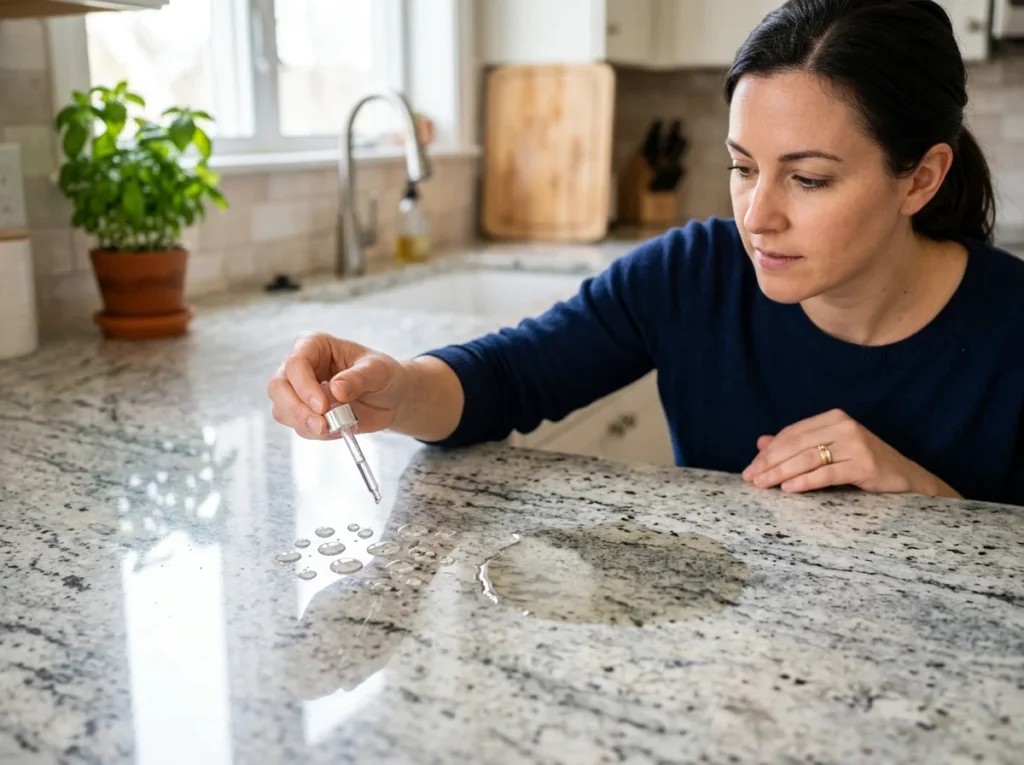
A professional can test the stone and evaluate the existing sealer before applying a new product.
Homeowners may also notice that spills seem to absorb into a natural stone surface more readily than before. However, appearance alone is not always enough to determine whether resealing is needed.
Do not automatically add another layer of sealer simply because the countertop looks dry or dull. Proper cleaning, stone condition, and the type of previous sealer should be considered first.
If you are unsure, a professional countertop sealing service in Columbus can inspect the surface and recommend the appropriate next step.
What Is the Best Daily Cleaning Routine?
A simple routine is usually best.
Wipe up spills as soon as you notice them. For everyday countertop cleaning, use a product that is specifically suitable for your countertop material.
The Natural Stone Institute recommends mild soap or a stone cleaner for marble surfaces.
Avoid experimenting with strong household cleaners on natural stone. Products containing acids or other aggressive chemicals may damage sensitive surfaces.
A soft cloth or non-abrasive cleaning pad is also preferable to rough materials that can scratch or dull the finish.
How Can You Prevent Stains?
The easiest way to reduce stains is to avoid leaving spills on the countertop.
Coffee, wine, cooking oils, tomato-based foods, and strongly colored liquids should be wiped up promptly, particularly on porous natural stone.
Use cutting boards for food preparation and trays or mats beneath items that may leak. These simple habits reduce direct contact between the countertop and substances that can stain.
Sealing provides an additional layer of protection for suitable natural stone, but it works best alongside good daily care.
Does Sealing Prevent Marble Etching?
No.
This is one of the most common misunderstandings about marble sealing service.
Sealing helps reduce absorption and staining. It does not stop acids from reacting with marble.
If lemon juice, vinegar, wine, or another acidic substance contacts marble, it can leave a dull or altered area called an etch. The Natural Stone Institute specifically explains that sealing does not prevent etching.
Marble owners should therefore focus on both sealing and careful everyday use.
How Should You Protect Countertops From Heat?
Do not assume that a stone countertop should be used as a direct landing spot for every hot pan.
Granite has good heat resistance, but sudden temperature changes and direct contact with extremely hot cookware can still create risks depending on the stone, installation, and circumstances.
Quartz requires particular care because the resin used in engineered quartz can be affected by high heat.
Using trivets or heat pads is a simple way to reduce unnecessary risk.
How Can You Prevent Scratches and Damage?
Use cutting boards rather than cutting directly on the countertop.
Although some stone surfaces are hard, knives can still damage or dull their finish. Heavy objects can also cause chips around vulnerable edges.
Avoid dragging appliances, cookware, or other heavy objects across the surface.
For natural stone, good maintenance is not just about sealing. Daily habits play a large role in stone surface protection.
DIY vs Professional Countertop Sealing
DIY sealing can be suitable for some homeowners, but preparation and product selection matter.
The surface needs to be clean and dry, and the sealer must be compatible with the stone. Applying too much product or failing to remove excess sealer can create an unwanted residue or finish.
Professional sealing can make more sense when the countertop is expensive, heavily used, stained, difficult to access, or already has an unknown sealer on it.
A professional can also identify whether the surface needs cleaning, sealing, or another type of stone care.
What Does Professional Countertop Sealing Include?
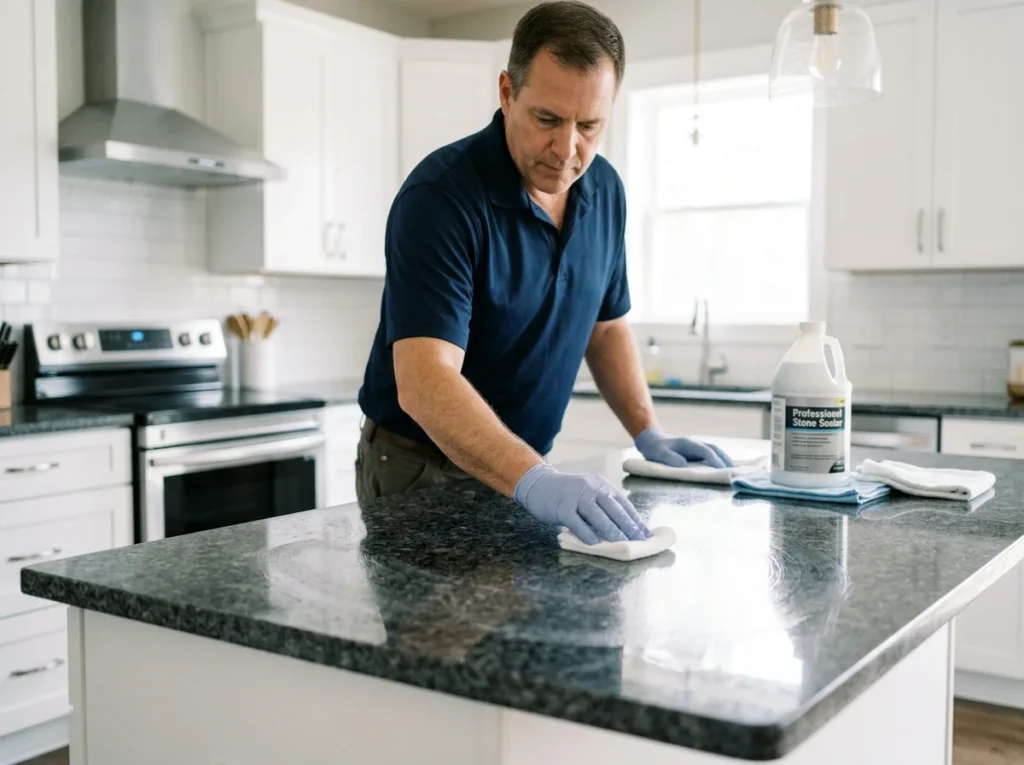
A professional countertop sealing contractor in Columbus should first inspect the material and surface condition.
Depending on the project, the process may include cleaning, preparation, applying the appropriate sealer, allowing the product to work according to its instructions, and removing excess product.
Buckeye Rock Tops says it uses high-quality impregnating sealer on granite and marble countertops. The company also states that natural stone sealing is included with its countertop installations.
The exact process should depend on the stone and the product being used.
How Much Does Countertop Sealing Cost?
Professional sealing prices vary based on countertop size, stone condition, preparation, location, and whether additional restoration is needed.
One recent 2026 pricing source estimates professional annual resealing plans for natural stone. Its service area includes Columbus and surrounding Central Ohio communities. granite resealing at roughly $6–$25 per square foot, with a typical total of $250–$1,000 for a kitchen of up to about 40 square feet.
These figures are general market guidance, not Buckeye Rock Tops pricing.
If the surface needs stain removal, honing, polishing, or other restoration before sealing, the project can cost more.
When Should You Call a Professional?
Professional help is worth considering when you see persistent stains, dull areas, etching, chips, or uncertainty about the existing sealer.
It is also useful when you are preparing to reseal a valuable natural stone countertop and do not know which product was previously applied.
Buckeye Rock Tops provides countertop sealing and maintenance in Columbus and offers annual resealing plans for natural stone. Its service area includes Columbus and surrounding Central Ohio communities.
Frequently Asked Questions
Does granite need to be sealed?
Some granite benefits from sealing, but the need and resealing schedule depend on the specific stone and sealer.
Does marble need sealing?
Marble is commonly sealed to help reduce staining, but sealing does not prevent etching from acidic substances.
Does quartz need to be sealed?
Engineered quartz is generally non-porous and does not require routine sealing.
Can I use vinegar to clean natural stone?
It is best to avoid acidic cleaners such as vinegar on sensitive natural stone, especially marble. Use a cleaner made for the specific stone instead.
Is professional sealing better than DIY?
Professional sealing can be useful when the stone is valuable, difficult to identify, heavily used, or needs preparation before sealing. DIY may be suitable when the material and product requirements are clearly understood.
Protecting Your Countertops for the Long Term
Good countertop sealing maintenance in Columbus, OH starts with knowing your material. Granite and marble may need sealing, while engineered quartz generally does not. Cleaning habits, spill control, heat protection, and careful use are just as important as sealing.
For natural stone, sealing should be based on the stone, existing protection, and product instructions rather than an automatic schedule. If the countertop is stained, etched, or overdue for professional care, an inspection can help determine what it actually needs.
Buckeye Rock Tops offers natural stone sealing and maintenance in Columbus, including granite and marble sealing and annual resealing options. If you are unsure whether your countertop needs sealing, contact Buckeye Rock Tops to discuss the stone, its current condition, and the appropriate maintenance approach.