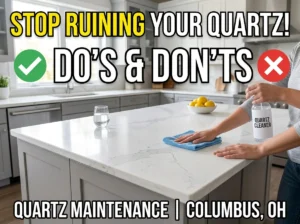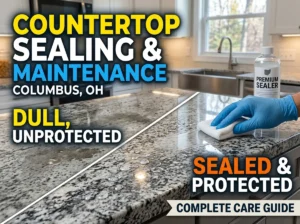
Quartz countertops are popular in Columbus kitchens because they offer a clean look without the routine sealing required by many natural stone surfaces. Engineered quartz is non-porous, so everyday cleaning is usually simple. Still, low maintenance does not mean no maintenance. Heat, harsh chemicals, abrasive cleaners, and sharp objects can damage the surface.
Good quartz countertop maintenance in Columbus, OH starts with a few simple habits. Buckeye Rock Tops can help Columbus homeowners compare countertop materials and understand the care each surface requires.
Does Quartz Need Regular Sealing?
No. Engineered quartz generally does not need routine sealing.
Unlike many porous natural stones, quartz surfaces are manufactured to be non-porous and non-absorbent. Major quartz manufacturers such as Cambria and Caesarstone state that their quartz surfaces do not require routine sealing.
That makes quartz different from materials such as some granite and marble varieties. If you are considering a new quartz surface, quartz countertop installation can provide a durable, low-maintenance option for a Columbus kitchen. Instead of spending time on regular sealing, quartz owners should focus on proper cleaning and protecting the surface from heat, scratches, and harsh chemicals.
Always follow the care instructions provided by your specific quartz manufacturer because products can differ.
How Do You Clean Quartz Countertops?
The easiest quartz countertop maintenance routine is also the simplest.
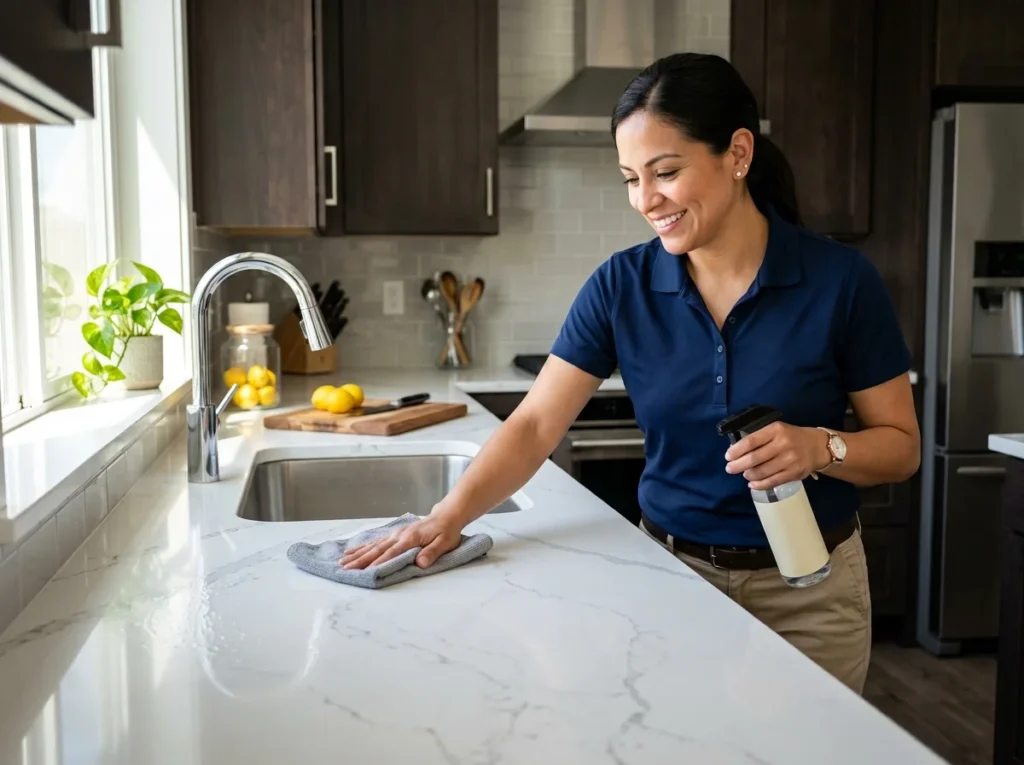
For everyday cleaning, use warm water and a soft cloth. A mild soap or manufacturer-approved cleaner can be used when needed. Cambria recommends warm water, a soft cotton cloth, and mild soap if desired.
A basic routine looks like this:
- Remove crumbs and loose debris.
- Wipe the surface with warm water and a soft cloth.
- Use a mild cleaner when needed.
- Rinse away cleaner residue.
- Dry the surface with a clean soft cloth.
Cleaning after food preparation helps prevent residue from building up.
What Cleaning Products Should You Avoid?
Avoid assuming that a product is safe just because it is sold as a household cleaner.
Quartz manufacturers warn against harsh chemicals, strong acids or alkalis, abrasive cleaners, and certain heavy-duty products. Cambria specifically warns against products such as oven cleaners, bleach, abrasive pads, paint removers, and similar aggressive cleaners.
For cleaning product recommendations, start with your quartz manufacturer’s care instructions. If you want to use a product that is not specifically recommended, test it on an inconspicuous area first.
When in doubt, mild soap, warm water, and a soft cloth are a safer starting point.
What Are the Biggest Don’ts for Quartz Countertops?
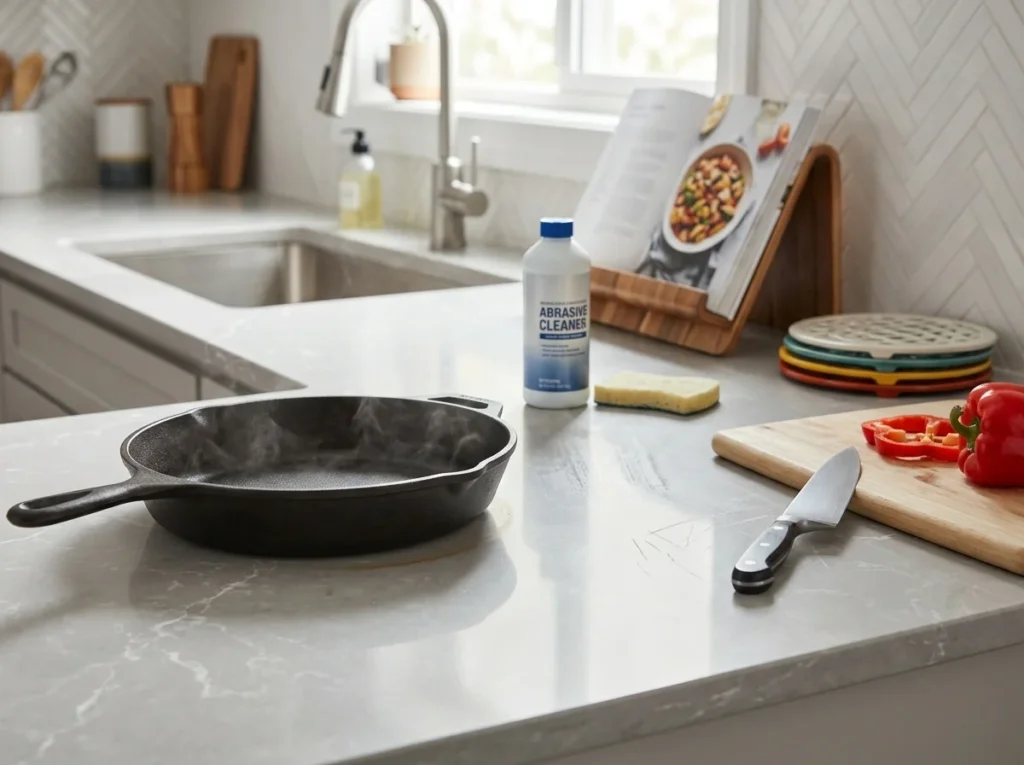
The biggest mistakes are usually easy to avoid.
Don’t Put Hot Pans Directly on Quartz
Quartz is heat-resistant, but it is not heat-proof. Direct or prolonged exposure to high heat can damage the surface. Sudden temperature changes can also create problems, particularly around edges and other vulnerable areas.
Cambria recommends using a solid trivet or closed-weave hot pad under hot cookware, slow cookers, griddles, and similar appliances.
Using a trivet takes only a few seconds and is one of the easiest ways to practice heat damage prevention.
Don’t Cut Directly on the Countertop
Quartz has good scratch resistance, but no countertop should be treated as a cutting board.
Use a cutting board whenever preparing food. Cambria notes that cutting directly on the surface can leave scratch marks, particularly on some designs.
A cutting board also keeps knives sharper and gives you a safer food-preparation surface.
Don’t Use Abrasive Scrubbers
Steel wool, rough scouring pads, and abrasive cleaning products can affect the finish.
If you have a stubborn mark, start with a soft cloth and a cleaner approved for your particular quartz surface. Do not attack the stain with an aggressive pad simply because it looks difficult to remove.
Don’t Use Harsh Chemicals
Strong chemicals can damage quartz.
Caesarstone warns against strong chemicals and solvents, strong acids and alkalis, oxidizers, and several heavy-duty cleaning products.
If a damaging substance gets onto the surface, rinse it away promptly with water and follow the manufacturer’s care instructions.
How Should You Handle Spills?
Wipe spills when you notice them.
Quartz is highly stain resistant because of its non-porous surface, but leaving liquids, food residue, or cleaning products sitting on the countertop is still poor practice. Caesarstone recommends wiping away wet spills and keeping the surface dry.
Pay extra attention to coffee, wine, cooking oils, sauces, and strongly colored foods. Prompt cleanup keeps the surface looking cleaner and reduces the chance of residue building up.
Can Quartz Countertops Scratch?
Quartz is scratch resistant, but it is not scratch-proof.
Sharp objects, rough materials, and certain types of impact can mark the surface. Cambria notes that no stone surface is completely scratch-proof.
For everyday surface protection, use cutting boards, avoid dragging heavy objects across the countertop, and keep sharp tools from making unnecessary contact with the surface. You can also review this engineered quartz countertop performance guide for more information about quartz durability and everyday use.
What About Stains on Quartz?
Quartz has strong stain resistance because its surface is non-porous and non-absorbent.
If you notice a mark, start with normal cleaning rather than immediately using a strong chemical.
For dried spills, gently soften the residue according to your manufacturer’s instructions and use an approved cleaner. Caesarstone recommends using an approved cleaner and a non-abrasive method for stubborn stains.
Do not use a razor blade, metal scraper, or abrasive pad unless the manufacturer specifically allows it.
Does Columbus Weather Affect Quartz Maintenance?
Indoor quartz countertops are not exposed to Columbus weather in the same way as exterior surfaces. Normal changes in outdoor temperature and humidity do not mean that your indoor countertop needs a special seasonal maintenance routine.
The bigger concerns are everyday kitchen conditions: hot cookware, spills, cleaning products, sharp objects, and impact around edges.
If quartz is being considered for an outdoor application, check the manufacturer’s requirements first. Some manufacturers have specific limitations related to prolonged UV exposure.
Do Quartz Countertops Need Professional Maintenance?
Usually, routine cleaning can be handled by the homeowner.
A professional countertop maintenance service in Columbus becomes more useful when the surface has a chip, deep scratch, difficult damage, or another issue that normal cleaning cannot solve.
It is also helpful when you are unsure which quartz product you have or which cleaning method is safe.
Do not try to polish, refinish, or chemically treat damaged quartz with a random product. Cambria specifically advises against applying sealers, penetrants, or topical treatments to its quartz products.
When Should You Consider Quartz Countertop Repair?
Small surface issues are not always the same as major damage.
A stubborn food mark may simply need proper cleaning. A chip at the edge, deep scratch, crack, or damage around a sink may require professional evaluation.
If cleaning does not resolve the problem, avoid aggressive DIY methods. A quartz countertop repair in Columbus should be evaluated based on the type of damage and the particular quartz product.
The sooner a significant issue is evaluated, the easier it may be to determine the appropriate repair or replacement option.
What Should You Keep in Your Kitchen?
A few simple items can make quartz care much easier:
- Soft microfiber or cotton cloths
- Mild dish soap
- Manufacturer-approved countertop cleaner
- Cutting boards
- Trivets or hot pads
- A soft sponge for routine cleaning
You do not need a cabinet full of specialty products. In fact, using too many cleaning products can create more opportunities for accidental surface damage.
Quartz Countertop Do’s and Don’ts
Do:
- Clean spills promptly.
- Use warm water and a soft cloth for everyday cleaning.
- Follow your quartz manufacturer’s care instructions.
- Use cutting boards.
- Use trivets under hot cookware.
- Clean up food and liquid residue after cooking.
- Check unfamiliar cleaning products before widespread use.
Don’t:
- Put hot pans directly on the surface.
- Cut directly on the countertop.
- Use abrasive scrub pads.
- Use harsh chemicals without checking compatibility.
- Use oven cleaners or strong solvents.
- Drag heavy or sharp objects across the surface.
- Apply a sealer unless the manufacturer specifically instructs you to.
These simple habits cover most of the day-to-day quartz countertop dos and donts.
How Is Quartz Different From Natural Stone?
Quartz and natural stone need different care routines. Granite and marble are natural stones and may require sealing depending on the material. Engineered quartz is non-porous and generally does not need routine sealing. If your kitchen also has natural stone surfaces, countertop sealing and maintenance can help protect suitable granite and marble countertops. That difference is important when choosing a countertop cleaner. A product designed for one surface should not automatically be used on another.
If your kitchen contains several countertop materials, identify each one before creating a cleaning routine. This countertop material comparison guide can also help when comparing quartz with natural stone and other countertop options.
Frequently Asked Questions
How often should I clean my quartz countertop?
Clean it as needed throughout the day, especially after food preparation. Warm water, a soft cloth, and mild soap are usually enough for everyday cleaning.
Does quartz need to be sealed?
No. Engineered quartz is generally non-porous and does not require routine sealing.
Can I put a hot pan on quartz?
It is best not to. Use a trivet or heat pad because quartz is not heat-proof and direct heat can damage the surface.
Can I use bleach on quartz?
Do not assume bleach is safe. Some manufacturers specifically warn against bleach and other aggressive chemicals. Check the care instructions for your exact quartz product.
Can I cut directly on quartz?
No. Use a cutting board. Quartz is scratch resistant, but it is not scratch-proof.
Do quartz countertops need polishing?
Routine polishing is generally unnecessary. Cambria states that its quartz surfaces do not need routine polishing or sealing.
Simple Quartz Care for Columbus Homeowners
Good quartz countertop maintenance in Columbus, OH does not require complicated products or a long maintenance schedule. The main goal is to protect the surface from the things that can cause damage: direct heat, sharp objects, abrasive cleaners, harsh chemicals, and prolonged exposure to spills.
For everyday care, keep it simple. Wipe the countertop regularly with warm water and a soft cloth, use a suitable mild cleaner when needed, and follow the instructions from your quartz manufacturer.
If your countertop has a chip, deep scratch, crack, or other damage that normal cleaning cannot resolve, professional evaluation is a better choice than experimenting with abrasive or chemical treatments. Contact Buckeye Rock Tops to discuss the condition of your quartz countertop and determine the appropriate next step.