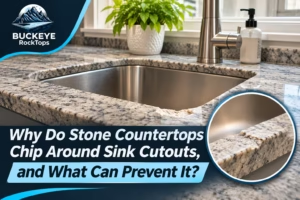
A small chip along a kitchen sink opening can appear after years of normal use, or it may show up soon after installation. That exposed edge is frequently struck by pans, dishes, and sink accessories. When a crack starts at a cutout corner instead, the concern may go beyond everyday impact damage. Understanding the difference helps homeowners decide whether they need a cosmetic repair or a closer look at the stone and its support.
Countertop chipping around sink openings happens for several reasons: sharp exposed edges, accidental impact, weaknesses in the stone, or poorly managed stresses around the cutout. Sink mounting and nearby cabinet support also matter. Most minor chips do not mean the entire countertop is failing, but a spreading crack or loose section deserves professional attention. Prevention begins with how the opening is designed and continues with how the sink is used.
Why Is the Area Around a Sink More Vulnerable to Damage?
A sink cutout removes a substantial section from a stone slab, leaving narrower strips in front of and behind the bowl. Those strips must remain supported while the countertop handles ordinary kitchen activity. The exposed rim also receives more contact than the rest of the surface because cookware moves across it daily. A chip at the rim and a crack extending from a corner may therefore have different causes, even when both appear beside the sink.
How Does Sink Cutout Shape Affect Cracking?
Sharp Inside Corners Concentrate Stress
An inside corner changes how forces travel through a slab. When a cutout has a sharp, square corner, stress can concentrate at that point instead of spreading more gradually through the stone. This can encourage a crack to begin or grow when the slab is handled, installed, or loaded. Caesarstone’s professional guidance requires rounded inside corners for its quartz products and warns against square cuts and cuts extending beyond the intended radius.
Why Cutout Dimensions and Narrow Stone Strips Matter
The distance between a sink opening and the front or back edge determines how much stone remains in those areas. A very narrow strip may need additional support and careful handling, particularly around an undermount sink. Placement near a joint can introduce further considerations. There is no single safe spacing that fits every granite or quartz product; the fabricator must follow the selected material’s specifications and the sink manufacturer’s dimensions.
Can Everyday Kitchen Use Cause Countertop Edge Chips?
Yes. A heavy pot set down against the inner edge, a cast-iron pan dragged across the opening, or a metal utensil dropped onto the rim can break off a small piece. Repeated contact often occurs where dishes are rinsed and loaded into the sink. A polished stone surface may resist ordinary wear while its exposed edges remain vulnerable to concentrated blows. The presence of a chip does not, by itself, prove defective fabrication.
A sharply finished edge is generally less forgiving of impact than a subtly eased or rounded one. Caesarstone’s fabrication guidance specifically discourages sharp edge profiles because they can chip more readily. The appropriate finish depends on the material and sink design, especially where an undermount bowl leaves the stone rim exposed. Homeowners should not attempt to round a finished quartz or granite opening with household grinding tools; this work requires professional equipment and controls.
Does an Undermount Sink Put Extra Stress on the Stone?
An undermount sink hangs below the counter opening, so its mounting system must handle the sink’s weight and the additional load of water and dishes. Problems can develop if the bowl is inadequately supported or its mounting hardware loosens. Movement may stress the surrounding opening or damage the seal at the joint. MSI recommends that sinks installed with its Q countertop surfaces have support independent of the quartz, using a suitable sink-setting or rail system.
Are Granite and Quartz Sink Cutouts Damaged in the Same Way?
Both granite and engineered quartz can chip when a hard object strikes an exposed edge, but the materials do not have identical characteristics. Granite is natural stone, so mineral structure, veining, and naturally occurring fissures vary between slabs. A visible natural feature is not automatically a new fracture, although any line that widens or extends from a damaged corner should be examined. Material selection and cutout placement should account for the characteristics of the actual slab.
Engineered quartz is manufactured for consistent performance, but it is not immune to cracks or edge damage. Cutting too tightly around a sink or leaving sharp cutout corners can create vulnerable locations. Manufacturer-specific fabrication rules should determine radius, clearances, and reinforcement decisions rather than assumptions that all quartz brands behave the same way. Neither granite hardness nor quartz durability makes a thin strip around an opening safe from impact or inadequate support.
What Should a Fabricator Check Before Cutting the Sink Opening?
Accurate measurements begin with the exact sink model, mounting method, faucet positions, and cabinet layout. The fabricator needs to confirm the finished opening, how much stone remains around it, and whether the exposed rim can be finished without creating fragile edges. Where appropriate, the shop will also consider the slab’s natural characteristics and possible reinforcement. These questions should be resolved before fabrication, not after the sink has been installed.
Buckeye Rock Tops describes precision sink openings as part of its custom countertop fabrication work in Columbus, OH. That service is particularly relevant when a new layout requires an undermount bowl or leaves limited stone around the cutout. The practical takeaway is to review the sink and stone together, because changing the sink model after the slab is cut can create avoidable fit and support problems.
What Can Homeowners Do to Prevent Chips Around the Sink?
Small daily habits reduce the chance of a hard impact on the exposed rim. Lower heavy cookware into the bowl rather than letting it strike the stone, and avoid sliding cast-iron pans across the opening. Use a sink grid or suitable accessory when it helps keep dishes away from the rim, but ensure the accessory fits the bowl and does not press against the cutout edge. Wipe away grit before moving equipment across the counter.
How Can You Tell a Small Chip From a Serious Crack?
A small chip is usually a localized missing fragment at the exposed edge. It may feel rough or snag a cloth, yet the neighboring stone remains level and stable. A crack is typically a line extending through the material or away from a cutout corner. Warning signs include a line that lengthens, movement when the countertop is touched, or a narrow strip that appears to sag. Photos taken over time can help document changes.
Can a Chipped Sink Edge Be Repaired Without Replacing the Countertop?
Many small, stable chips can be evaluated for a color-matched resin or epoxy repair followed by careful finishing. The result depends on chip size, depth, edge profile, stone pattern, and access around the installed sink. A repair may make the damage less noticeable without restoring a factory-perfect appearance. If a loose fragment is recovered, keep it clean and dry for the fabricator to inspect rather than immediately gluing it back yourself.
Cracks, moving sections, or repeated breakage call for more than a filler patch. The fabricator should investigate cutout geometry, support, sink mounting, and nearby cabinet movement before recommending repair. Some damage may be repairable with a specialized method, while other conditions require replacing part or all of the countertop. A household epoxy kit cannot reliably resolve an unstable stone strip or a sink that is transferring loads incorrectly.
Frequently Asked Questions
Why Do Chips Often Appear on the Front Edge of a Sink Cutout?
The front rim is easy to strike while carrying pans or moving dishes into the sink, making it a frequent contact point. It may also be part of a narrow stone strip between the bowl and countertop front. These factors do not automatically mean the section is defective. A small isolated chip suggests an impact may be involved, while a growing crack or visible movement needs a professional assessment of support and geometry.
Does a Rounded Sink Cutout Corner Prevent Every Crack?
No. A properly rounded inside corner helps reduce stress concentration, but it cannot eliminate impact damage, inadequate support, sink movement, or weaknesses in a particular slab. Manufacturers publish cutout requirements for their own products, and those details should guide fabrication. A cracked corner should not be treated as a cosmetic issue merely because a radius was used. A professional still needs to evaluate where the crack started and what loads affect the area.
Can an Undermount Sink Cause Quartz or Granite to Crack?
An undermount sink does not automatically damage stone, but poor mounting or inadequate support can place unwanted loads around the opening. The weight of the bowl, water, and dishes should be managed by a suitable support arrangement. If the sink is shifting or its seal has opened, have the hardware and surrounding cabinet structure inspected. Repairing the visible stone without correcting an unstable sink may allow the same problem to return.
Is It Safe to Repair a Small Chip With Super Glue?
A quick household adhesive repair may look tempting, especially when the missing piece is available, but it can leave a visible patch and complicate professional finishing. Adhesive compatibility, color, and edge preparation matter, particularly around frequently used sinks. Clean the area gently and avoid exposing sharp chips to direct contact. A stone fabricator can judge whether a small resin repair is suitable or whether the damage signals a deeper problem.
Protect the Sink Opening Before a Small Chip Becomes a Bigger Problem
Most sink-edge chips are localized, but cracks, loose sections, and repeat damage deserve a closer look. Rounded cutout corners, sound support, suitable sink mounting, and careful daily use each address a different risk. For a new countertop project or questions about a damaged sink opening, contact Buckeye Rock Tops or call (380) 266-7082 to discuss the stone, sink design, and available next steps.