For most kitchens, porcelain or glazed ceramic tile is the practical default: durable, easy to wipe down, and available in nearly any style. Natural stone and marble bring more character in exchange for sealing and care. Slab backsplashes give a seamless, modern look, and glass or metal work well as accents. The right pick depends on what your backsplash has to endure, how much upkeep you’ll accept, and how it pairs with your countertop.
If you’re comparing kitchen backsplash materials in Columbus, OH, this guide covers what the backsplash actually has to handle, how each material performs, the grout detail that decides how easy it is to live with, how to pair it with your counters, and what drives cost.
What Your Backsplash Actually Has to Handle
A backsplash isn’t one surface with one job. It’s several zones with different demands:
- Behind the range: heat, grease, and splatter. This is the hardest-working spot, and the material should be suited to heat.
- Behind the sink: moisture and constant splashing, where a surface that resists water and cleans easily matters most.
- Along the prep areas: everyday smears and spills that need a quick wipe.
Those zones are why “what looks best” is only half the question. A material that’s perfect beside the sink can be the wrong choice behind a high-output burner. Many kitchens use one material throughout for a clean look, but nothing stops you from treating the range wall differently.
Kitchen Backsplash Materials Compared
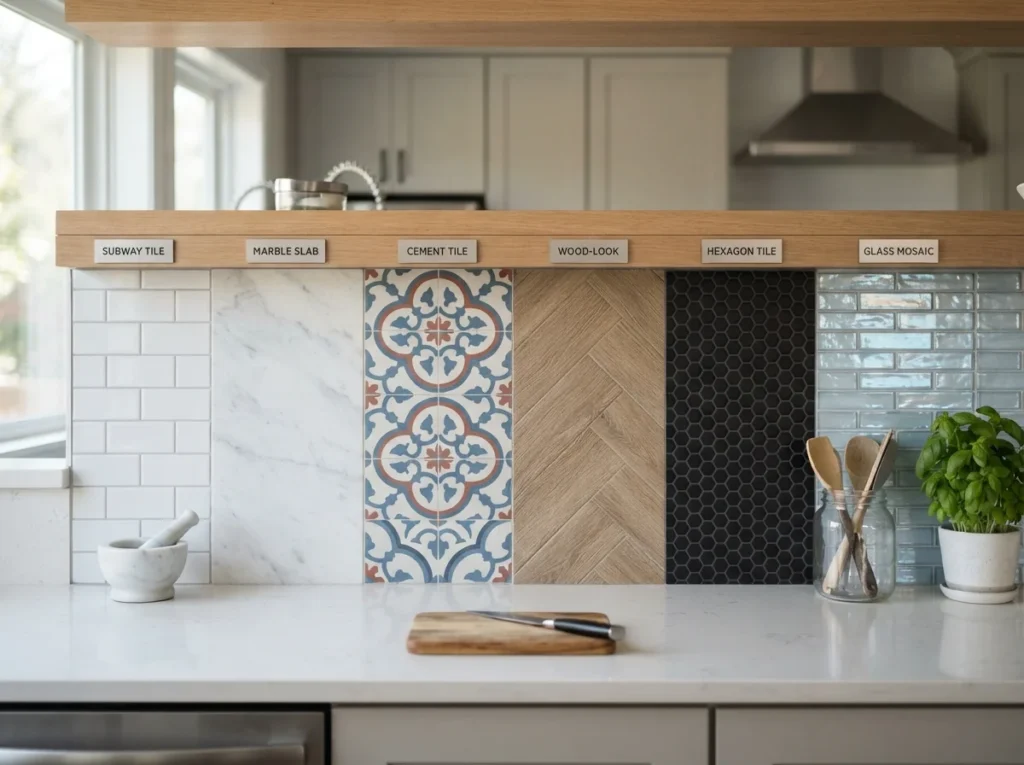
Ceramic and Porcelain Tile
Ceramic and porcelain tile are the most common choices, for good reason. Both clean easily, come in a huge range of colors and patterns, and handle kitchen conditions well. Porcelain is denser and less porous than ceramic, so it resists moisture and staining a bit better, and printing technology lets it convincingly mimic marble, concrete, or wood. Ceramic can offer handmade-looking variation, though the glaze on some tiles can scratch.
Larger tile formats mean fewer grout lines, which makes cleaning easier and gives a sleeker look. If tile is your direction, professional tile backsplash installation matters as much as the tile itself, since straight lines, even grout joints, and clean cuts around outlets are what make a finished wall look right.
Natural Stone and Marble
Natural stone offers a one-of-a-kind look that tile can only imitate. Marble, travertine, limestone, and quartzite each bring their own veining and texture. The trade-off is upkeep. Stone is porous, so it needs sealing to resist stains and moisture. Marble can etch when acidic splashes like lemon juice or tomato sauce sit on it, and stone behind a range can discolor if it isn’t sealed and cleaned properly. Use pH-neutral cleaners and reseal as recommended.
If you love the character and don’t mind the care, stone makes a striking wall. Stone backsplash installation is also where the cut and the fit matter most, since slabs and large pieces leave little room for error.
Quartz and Slab Backsplashes
A quartz backsplash, or one cut from a granite, marble, or porcelain slab, can run continuously up from the countertop. That means few or no grout lines and a wipe-clean surface that looks cohesive and modern. The trade-offs are cost, and the extra cutting needed around outlets and windows. For quartz specifically, check the manufacturer’s heat guidance before using it directly behind a range, since quartz resin doesn’t like sustained heat.
Glass and Metal
Glass tile is easy to clean and works well as a full backsplash or an accent. Metal tiles or sheets suit industrial and professional-style kitchens and handle heat, though they can scratch and dent. Both are good for accent walls or a feature behind the range, and worth discussing with your installer to confirm experience with the material.
Don’t Overlook the Grout
Grout is often the weak point of a tile backsplash, and it’s the part many people choose last. Standard cement-based grout is porous and needs sealing, commonly about once a year, to resist stains and moisture. Epoxy grout costs more but resists stains from the start and doesn’t need sealing, which can be worth it in a busy kitchen.
Color matters too. Darker grout hides discoloration better, particularly behind a cooktop, while light grout shows every splash. And the fewer grout lines you have, whether through larger tiles or a slab, the less cleaning you’ll do over the years.
Pairing a Backsplash With Your Countertop
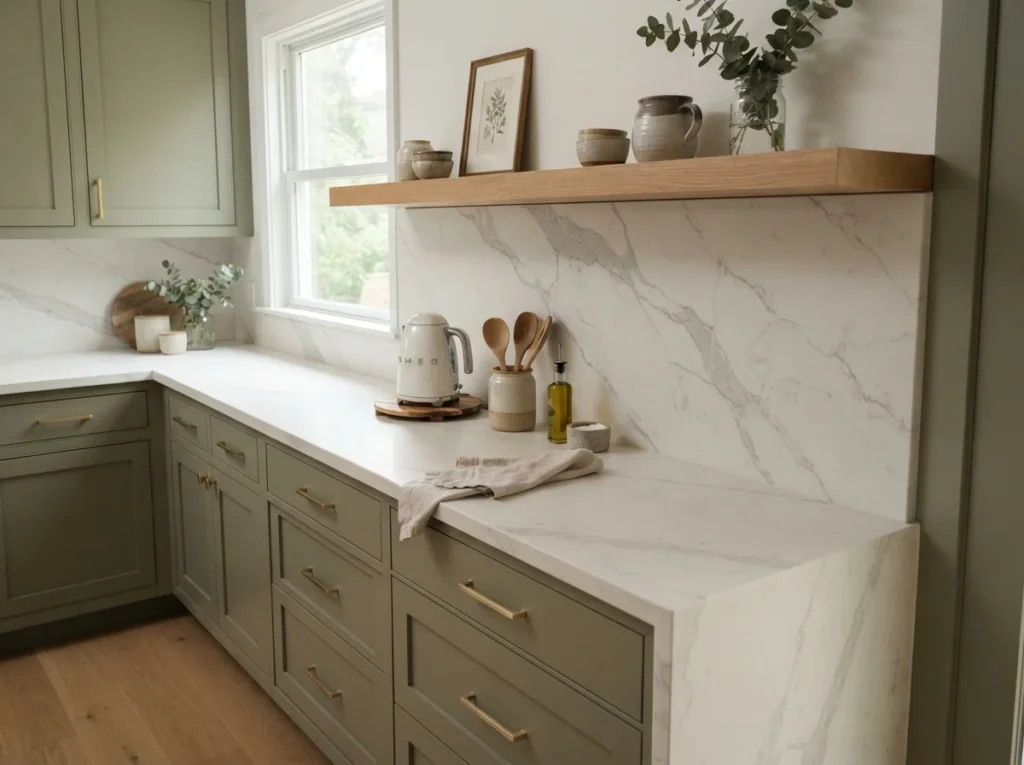
Backsplash and countertop are read together, so the combination matters more than either one alone. Before choosing colors, patterns, and finishes, explore our backsplash installation services in Columbus, OH to learn more about planning your backsplash project. A few principles can help you create a balanced combination:
- Let one be the quiet element. A heavily veined countertop usually calls for a simple backsplash, and a bold backsplash suits a plain counter.
- Decide between continuous and contrasting. Running the countertop material up the wall gives a seamless, modern look. A different material adds depth and personality.
- Check undertones. Whites, grays, and creams can clash if their undertones differ, so view them together instead of separately.
- Match the finish. A glossy backsplash beside a honed countertop can look intentional or accidental, depending on the rest of the room.
For modern looks, large-format tile, stacked layouts, and clean slab walls are common. Patterns like herringbone add visual interest, but they also add layout complexity and installation time.
What Affects Backsplash Cost
Backsplash cost swings widely, and material is only part of it. Basic ceramic tile can start around $5 to $15 per square foot for the material alone, while premium materials plus labor can push installed costs to $40 to $60 or more per square foot. Labor often equals or exceeds the material cost.
Please note: These prices are estimates only and are not confirmed. Final cost depends on the area to be covered, material and tile size, pattern complexity, wall preparation, cutouts around outlets and windows, labor and installation time, and other factors. A written, itemized quote after measurement is the only reliable number.
Natural stone and custom patterns raise the budget more than most people expect, which is why stone backsplash costs in Columbus are worth looking at separately before you commit.
Test Before You Commit
Photos hide a lot. Before ordering, get samples and tape them to the wall behind the sink and range. Look at them in daylight and in the evening, next to your actual countertop and cabinets. Ask what each material needs in cleaning and sealing, and whether the grout is cement-based or epoxy.
Timing matters too. The backsplash usually goes in after the countertops, so coordinating the two avoids gaps and rework. Buckeye Rock Tops installs tile and stone backsplashes for homeowners across Columbus and Central Ohio, which helps keep that sequence in one project.
Frequently Asked Questions
What backsplash material is easiest to clean?
Glazed ceramic, porcelain, glass, and slab surfaces wipe down quickly. The more grout lines a design has, the more cleaning it needs.
How high should a backsplash go?
Anywhere from a short strip above the counter to full height up to the cabinets or ceiling. Behind the range, many people extend it to the hood, since that’s where splatter reaches.
Is natural stone practical behind the stove?
It can be, if it’s properly sealed and cleaned with pH-neutral products. It needs more attention than tile, and marble is the most sensitive to acidic splashes.
Can I use different materials in one kitchen?
Yes. A feature material behind the range with a simpler backsplash elsewhere is common, as long as the colors and finishes coordinate.
Ready to Plan Your Backsplash?
If you’re still deciding between tile, stone, and a slab, a conversation about your layout and cooking habits can narrow it quickly. Contact us or call (380) 266-7082 to talk through options and ask for an itemized quote.