Quartz countertops Buckeye Lake OH homeowners choose can be a smart fit for kitchens and bathrooms. Quartz is durable, easy to clean, and available in many colors and patterns. It also has a non-porous surface, so routine sealing is usually not part of normal care. The final cost depends on the slab, counter size, edges, cutouts, fabrication, and installation.
The right choice is not only about finding a color you like. You also need to think about how you use the room, how much counter space you have, and how the surface will work with your cabinets and lighting. Buckeye Rock Tops helps homeowners plan custom countertop projects for kitchens, bathrooms, islands, and other spaces.
Is Quartz a Good Countertop Material?
Quartz is a good option for homeowners who want a strong surface without a long maintenance routine. The material is engineered, so manufacturers can create more controlled colors and patterns than you usually see in natural stone.
That makes engineered quartz useful when you want a clean and balanced look across a kitchen. If your counters need more than one slab, a consistent pattern can also make the finished space feel more connected.
Quartz works well in busy homes because daily care is simple. You still need to protect it from strong heat and sharp objects, but normal cleaning does not require a special routine.
It can also work in many design styles. Some slabs have a soft solid color. Others use veining that gives the surface a marble-like look. There are also darker options for homeowners who want more contrast.
What Affects Quartz Countertop Cost?
There is no single quartz cost that fits every project. The amount of material matters, but fabrication and installation also play a large role in the final quote.
A small bathroom vanity may need only a limited piece of material. A large kitchen with an island, sink, cooktop, backsplash, and several corners needs much more planning and fabrication.
The slab itself is another major factor. Simple designs may fall into a different price level than premium patterns or special finishes. Larger patterns can also affect how the fabricator lays out the material.
Your estimate may also change because of:
- Countertop measurements
- Number of slabs needed
- Sink and cooktop cutouts
- Edge profile
- Number and position of seams
- Old countertop removal
- Backsplash material
- Island size
- Delivery and installation
Instead of using one online cost-per-square-foot number as your full budget, ask for a quote based on your actual layout. If you are already planning the work, Buckeye Rock Tops explains its approach to quartz countertop installation and custom fitting.
Why Can Two Quartz Estimates Be Very Different?
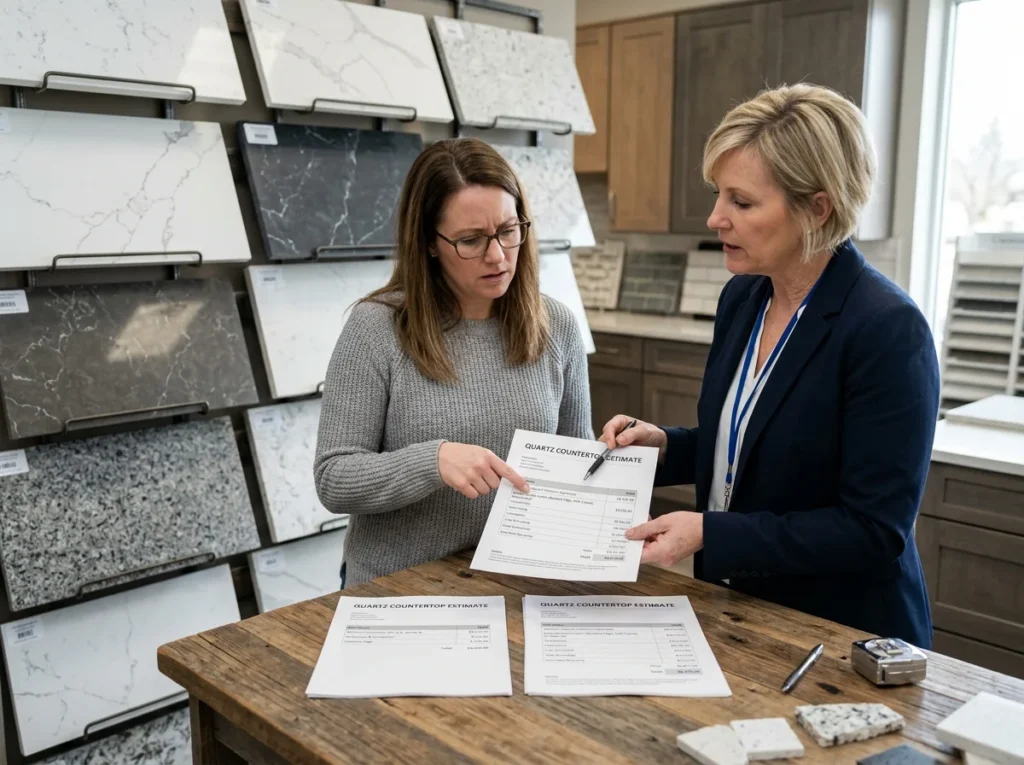
Two estimates can be different even when both companies are pricing quartz. One may include removal, sink cutouts, finished edges, and installation. Another may show a lower starting price but charge for some of those items later.
The slab choice can also be different. A basic quartz slab and a premium design may both be called quartz, but their material cost can be far apart.
Before comparing totals, look at what each quote includes. Check the material, measurements, edge, cutouts, seams, delivery, removal, and installation.
This gives you a fairer comparison. A clear quote is often more useful than the lowest number on the page.
How Durable Are Quartz Countertops?
Quartz is made for regular kitchen and bathroom use. It resists many common stains and scratches, which is one reason homeowners choose it for busy rooms.
Still, quartz is not damage-proof.
Using a cutting board is better than cutting directly on the surface. A hard hit against an exposed edge may also cause damage. Hot cookware should sit on a trivet rather than directly on the counter.
Good habits do not make quartz difficult to own. They simply help protect your investment.
Can Quartz Stain?
Quartz has a non-porous surface, which gives it good resistance to many household spills. Coffee, food, makeup, soap, and other products are less likely to soak into the material the way they can with some porous surfaces.
That does not mean spills should sit for hours.
Wipe them up when you notice them. Dried food, oil, or cleaner residue can still leave a mess on the surface and take more work to remove.
Can Quartz Scratch?
Quartz is scratch resistant, but it is still better to use a cutting board. Sharp tools can leave marks under the wrong conditions, and cutting directly on a hard counter is not good for your knives either.
Take extra care around edges and corners. These areas can be more open to damage if they are hit by a heavy pan or other hard object.
Can Heat Damage Quartz?
Quartz handles normal kitchen use well, but very hot cookware should not sit directly on the surface. The material contains binders as part of its engineered structure, and strong direct heat can damage the finish.
A trivet or hot pad is a simple fix.
Keep one near the range if you cook often. It takes little effort and can help prevent a costly problem.
Does Quartz Need Regular Sealing?
Quartz normally does not need routine sealing. That is one of its biggest differences from some natural stone surfaces.
Its non-porous structure helps keep liquids from moving into the countertop. For many homeowners, this makes quartz care easier because there is no regular sealing schedule to remember.
You should still follow the care guide for the brand you buy. Different makers may have their own advice for cleaners, finishes, and stain removal.
The basic routine, though, is simple. Clean spills, avoid harsh products, use a cutting board, and protect the surface from high heat.
Quartz vs. Granite: Which One Should You Choose?
Quartz may be a better fit if you want a more controlled pattern and less regular surface care. Granite may be the better choice if you want natural stone where each slab has its own mineral movement and color.
Neither material is right for everyone.
Granite has natural variation. Some homeowners love that because no two pieces look exactly the same. Quartz is engineered, so its pattern tends to be easier to predict.
Maintenance is another difference. Quartz normally does not need routine sealing. Some natural stone surfaces may need more care depending on the material and finish.
If you are still deciding, this countertop material comparison can help you look at quartz, granite, and marble side by side before choosing.
What Quartz Colors Work Best in a Kitchen?
The best quartz countertop design depends on your cabinets, flooring, backsplash, room size, and natural light.
Light quartz is a popular option for smaller or darker kitchens because it can help the space feel brighter. Soft whites and warm cream tones can also work well with wood cabinets.
Gray quartz offers a more neutral look. It can pair well with white, dark, or wood-tone cabinets without taking over the room.
Dark quartz creates stronger contrast. It may work well in a kitchen with light cabinets or a bright island area.
Bold veining can make the counter more of a design feature. It often works best where the pattern has enough room to show, such as a long counter or large island.
For Buckeye Lake homes, look at your sample in the actual room if possible. Natural light can change the way white, gray, and warm tones appear during the day.
Should You Choose Polished or Matte Quartz?
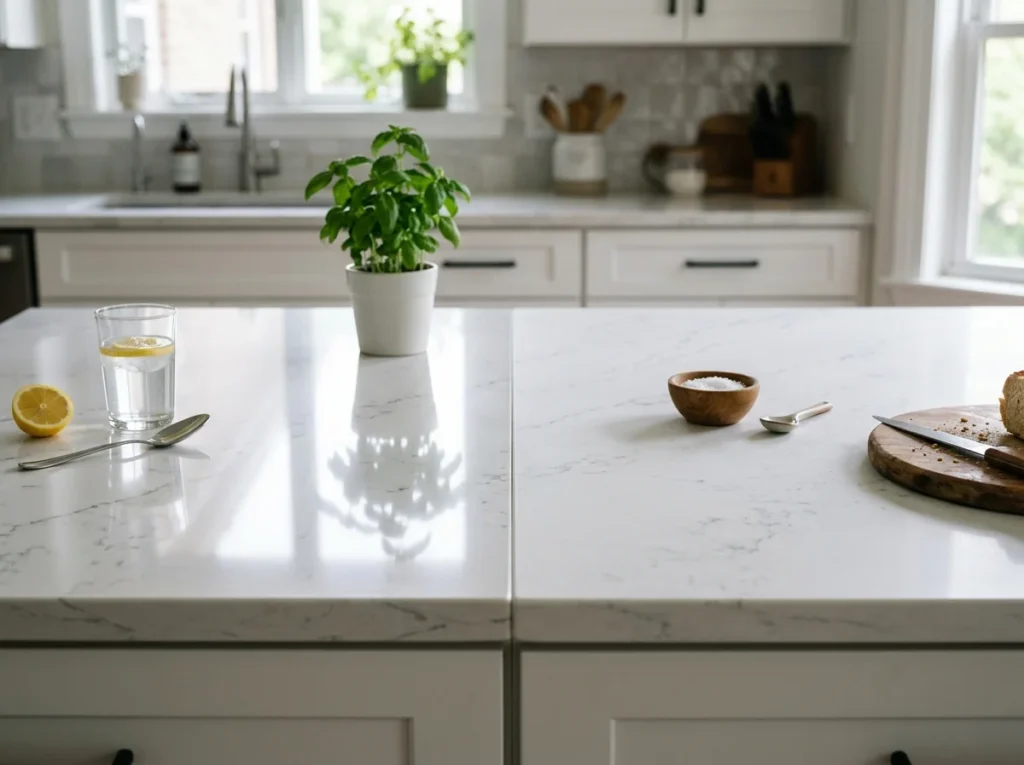
A polished finish has more shine. It reflects light and can give a kitchen a clean, finished appearance.
Matte quartz has less reflection. It often creates a softer look and may work well with wood cabinets, simple hardware, and warm colors.
The choice is mostly about design and daily use.
Some matte surfaces can show fingerprints or marks more easily than polished finishes. If low-maintenance cleaning is one of your main goals, ask to see both finishes before making a choice.
Look at them under natural and indoor light. A small showroom sample can look different once it is spread across a large kitchen.
Which Edge Profile Looks Best on Quartz?
Edge profiles change the way the counter looks from the side. A simple edge can make the slab feel clean and modern. A more detailed edge may suit a traditional kitchen.
The best edge also depends on your cabinets and the thickness of the material.
A simple eased or slightly rounded edge keeps most of the attention on the stone pattern. It can be a practical choice for many kitchens and bathroom vanities.
More detailed profiles add extra design work. A waterfall edge takes the idea further by carrying the countertop material down the side of an island.
Ask how the edge will affect fabrication before making the final choice. Some profiles may add more work to the project.
How Does Quartz Countertop Installation Work?
Good quartz countertop installation starts with accurate measurements. The fabricator needs to know the final cabinet layout, sink style, appliance openings, overhangs, walls, and edge choices before cutting begins.
The cabinets also need to be ready for the weight and fit of the new counters. Small changes in level or layout can affect how the pieces sit once they arrive.
The main steps usually include measuring the space, planning the slab layout, making cutouts, finishing the edges, checking seams, and installing the finished pieces.
Large kitchens may need more than one piece of quartz. In that case, seam placement becomes part of the design. Good seam planning can make the finished counter look much cleaner.
Countertop work is available across the Central Ohio communities served by Buckeye Rock Tops, including kitchen and bathroom projects with different layouts and material needs.
When Should You Replace Your Existing Countertops?
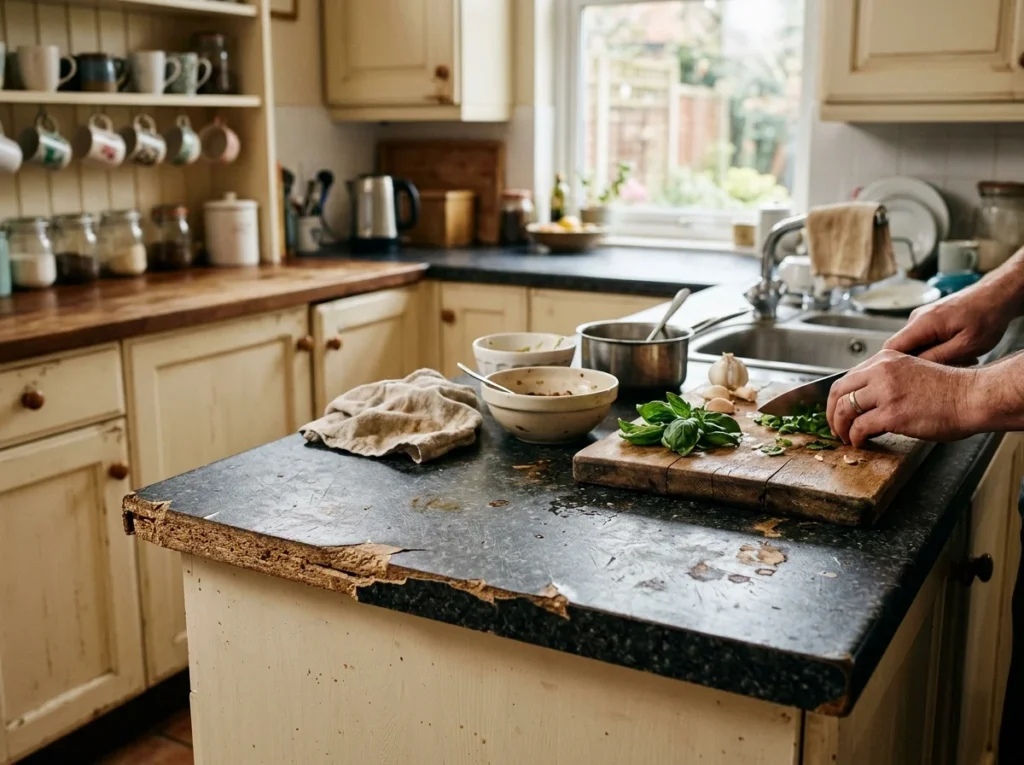
Quartz countertop replacement makes sense when your old surface is damaged, difficult to maintain, or no longer works with your new kitchen design.
A replacement may also be needed when the cabinet layout changes. A new sink, island, cooktop, or cabinet run can make the old counter hard to reuse.
Still, replacement should not be automatic.
If your current counters are in good condition and fit the new layout, keeping them may help control the project budget. Ask your contractor or fabricator if reuse is practical before demolition starts.
The decision should be based on condition, layout, and design goals rather than age alone.
Can Quartz Be Used in Bathrooms?
Yes. Custom quartz countertops can work well for bathroom vanities because the surface is easy to clean and does not normally need sealing.
Quartz also gives you many color choices. A simple white vanity top can keep a small bathroom feeling open, while a veined design can add more detail to a larger primary bathroom.
Think about the sink style before choosing the slab. Undermount sinks need proper cutouts and finished edges around the opening.
The vanity itself should also be level and ready to support the top. Accurate measurements matter just as much in a bathroom as they do in a kitchen.
How Should You Clean Quartz?
Daily quartz care should stay simple. For most normal messes, start with warm water, a soft cloth, and a mild cleaner that is safe for the surface.
Avoid rough pads unless the manufacturer says they are safe. Harsh chemicals can also damage the finish or leave the surface looking dull.
Three basic habits can handle most daily care:
- Clean spills before they dry.
- Use a cutting board during food prep.
- Place hot cookware on a trivet.
You do not need to over-clean the surface. Gentle and regular care is usually better than using strong products every day.
FAQs About Quartz Countertops in Buckeye Lake
Are quartz countertops good for a busy kitchen?
Yes. Quartz is durable, non-porous, and simple to clean. These features can make it a practical choice for kitchens used every day. A cutting board and trivet can help protect the surface.
How much do quartz countertops cost?
There is no single price for every project. Slab choice, counter size, edge style, cutouts, seams, removal, fabrication, and installation all affect the final quote. A measured estimate is more useful than relying only on a general square-foot price.
Does quartz need to be sealed?
Most quartz surfaces do not need routine sealing. The material is engineered with a non-porous surface. Always check the care instructions for the exact product you choose.
Is quartz good for bathroom vanities?
Yes. Quartz can work well around bathroom sinks because it is easy to clean and available in many colors. It can be fabricated for single vanities, double vanities, and custom layouts.
Is quartz better than granite?
It depends on what you value most. Quartz offers more controlled patterns and easy care. Granite gives you natural stone with unique color and mineral movement. Both can work well when they suit the room and your daily habits.
Should I see the full slab before ordering?
Yes, especially when the pattern has large veins or strong movement. A small sample may not show how the full design will look across an island or long counter.
Choose Quartz Around the Way You Use Your Home
Quartz countertops Buckeye Lake OH homeowners choose should fit more than the color scheme. Think about how often you cook, how much counter space you need, the amount of natural light in the room, and how much daily care you want.
Quartz can give you a durable surface with many design choices and a simple care routine. The final result also depends on accurate measurements, good fabrication, and careful installation.
When you are ready to compare slabs, discuss measurements, or plan a quartz countertop replacement, you can request a countertop estimate based on your actual kitchen or bathroom.